 |
ACloudViewer
3.9.4
A Modern Library for 3D Data Processing
|
|
ACloudViewer
3.9.4
A Modern Library for 3D Data Processing
|
A plottable representing a bar chart in a plot. More...
#include <qcustomplot.h>
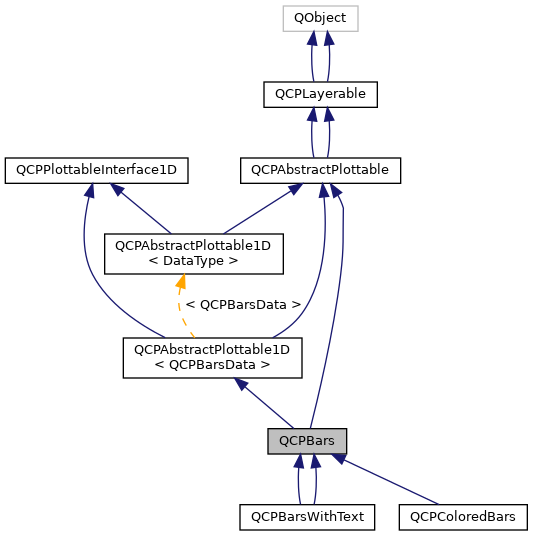
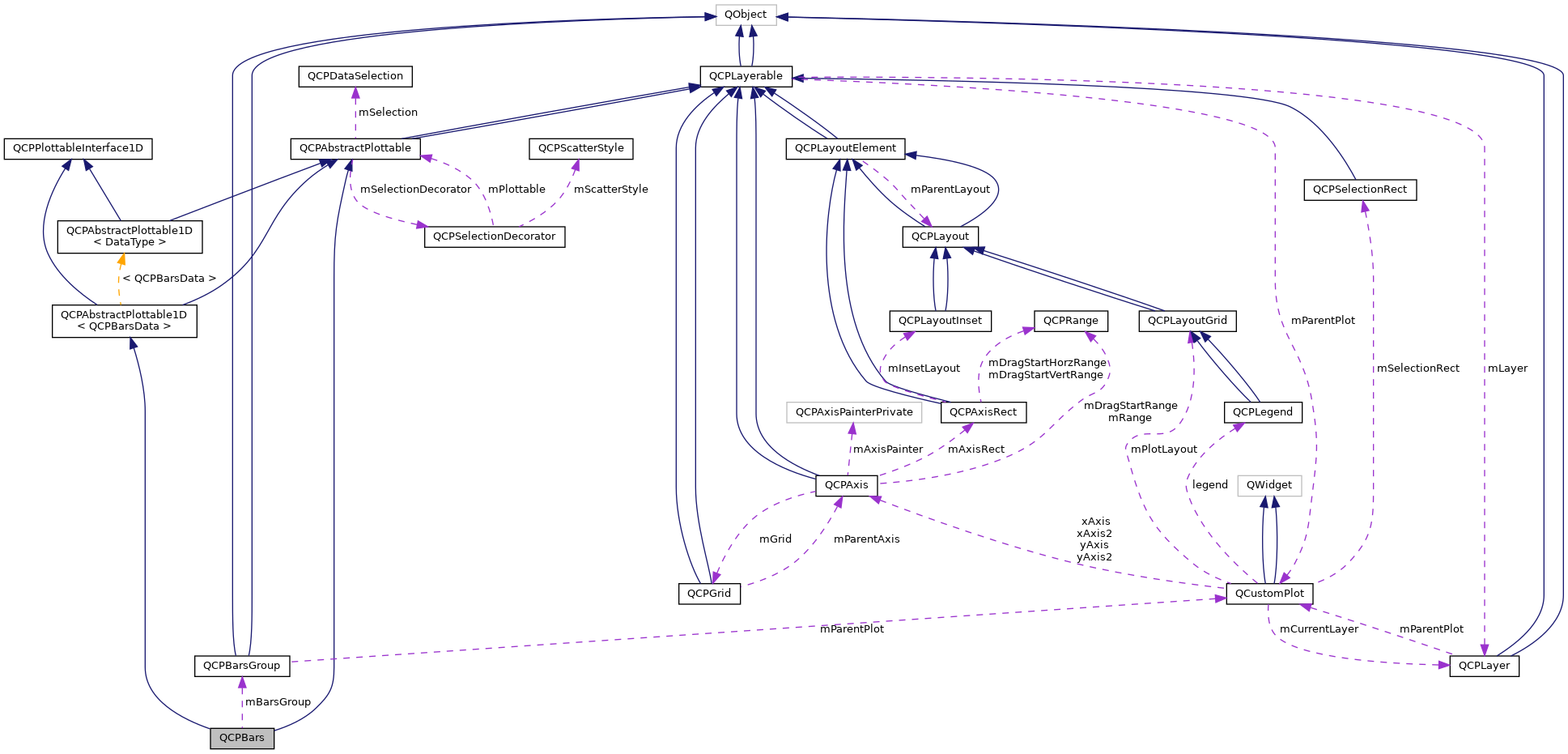
Public Types | |
| enum | WidthType { wtAbsolute , wtAxisRectRatio , wtPlotCoords , wtAbsolute , wtAxisRectRatio , wtPlotCoords } |
| enum | WidthType { wtAbsolute , wtAxisRectRatio , wtPlotCoords , wtAbsolute , wtAxisRectRatio , wtPlotCoords } |
Public Member Functions | |
| QCPBars (QCPAxis *keyAxis, QCPAxis *valueAxis) | |
| virtual | ~QCPBars () |
| double | width () const |
| WidthType | widthType () const |
| QCPBarsGroup * | barsGroup () const |
| double | baseValue () const |
| double | stackingGap () const |
| QCPBars * | barBelow () const |
| QCPBars * | barAbove () const |
| QSharedPointer< QCPBarsDataContainer > | data () const |
| void | setData (QSharedPointer< QCPBarsDataContainer > data) |
| void | setData (const QVector< double > &keys, const QVector< double > &values, bool alreadySorted=false) |
| void | setWidth (double width) |
| void | setWidthType (WidthType widthType) |
| void | setBarsGroup (QCPBarsGroup *barsGroup) |
| void | setBaseValue (double baseValue) |
| void | setStackingGap (double pixels) |
| void | addData (const QVector< double > &keys, const QVector< double > &values, bool alreadySorted=false) |
| void | addData (double key, double value) |
| void | moveBelow (QCPBars *bars) |
| void | moveAbove (QCPBars *bars) |
| virtual QCPDataSelection | selectTestRect (const QRectF &rect, bool onlySelectable) const |
| virtual double | selectTest (const QPointF &pos, bool onlySelectable, QVariant *details=0) const |
| virtual QCPRange | getKeyRange (bool &foundRange, QCP::SignDomain inSignDomain=QCP::sdBoth) const |
| virtual QCPRange | getValueRange (bool &foundRange, QCP::SignDomain inSignDomain=QCP::sdBoth, const QCPRange &inKeyRange=QCPRange()) const |
| virtual QPointF | dataPixelPosition (int index) const |
| QCPBars (QCPAxis *keyAxis, QCPAxis *valueAxis) | |
| virtual | ~QCPBars () |
| double | width () const |
| WidthType | widthType () const |
| QCPBarsGroup * | barsGroup () const |
| double | baseValue () const |
| QCPBars * | barBelow () const |
| QCPBars * | barAbove () const |
| QCPBarDataMap * | data () const |
| void | setWidth (double width) |
| void | setWidthType (WidthType widthType) |
| void | setBarsGroup (QCPBarsGroup *barsGroup) |
| void | setBaseValue (double baseValue) |
| void | setData (QCPBarDataMap *data, bool copy=false) |
| void | setData (const QVector< double > &key, const QVector< double > &value) |
| void | moveBelow (QCPBars *bars) |
| void | moveAbove (QCPBars *bars) |
| void | addData (const QCPBarDataMap &dataMap) |
| void | addData (const QCPBarData &data) |
| void | addData (double key, double value) |
| void | addData (const QVector< double > &keys, const QVector< double > &values) |
| void | removeDataBefore (double key) |
| void | removeDataAfter (double key) |
| void | removeData (double fromKey, double toKey) |
| void | removeData (double key) |
| virtual void | clearData () |
| virtual double | selectTest (const QPointF &pos, bool onlySelectable, QVariant *details=0) const |
 Public Member Functions inherited from QCPAbstractPlottable1D< QCPBarsData > Public Member Functions inherited from QCPAbstractPlottable1D< QCPBarsData > | |
| QCPAbstractPlottable1D (QCPAxis *keyAxis, QCPAxis *valueAxis) | |
| virtual | ~QCPAbstractPlottable1D () |
| virtual int | dataCount () const |
| virtual double | dataMainKey (int index) const |
| virtual double | dataSortKey (int index) const |
| virtual double | dataMainValue (int index) const |
| virtual QCPRange | dataValueRange (int index) const |
| virtual bool | sortKeyIsMainKey () const |
| virtual int | findBegin (double sortKey, bool expandedRange=true) const |
| virtual int | findEnd (double sortKey, bool expandedRange=true) const |
| virtual QCPPlottableInterface1D * | interface1D () |
| Public Member Functions inherited from QCPAbstractPlottable | |
| QCPAbstractPlottable (QCPAxis *keyAxis, QCPAxis *valueAxis) | |
| virtual | ~QCPAbstractPlottable () |
| QString | name () const |
| bool | antialiasedFill () const |
| bool | antialiasedScatters () const |
| QPen | pen () const |
| QBrush | brush () const |
| QCPAxis * | keyAxis () const |
| QCPAxis * | valueAxis () const |
| QCP::SelectionType | selectable () const |
| bool | selected () const |
| QCPDataSelection | selection () const |
| QCPSelectionDecorator * | selectionDecorator () const |
| void | setName (const QString &name) |
| void | setAntialiasedFill (bool enabled) |
| void | setAntialiasedScatters (bool enabled) |
| void | setPen (const QPen &pen) |
| void | setBrush (const QBrush &brush) |
| void | setKeyAxis (QCPAxis *axis) |
| void | setValueAxis (QCPAxis *axis) |
| Q_SLOT void | setSelectable (QCP::SelectionType selectable) |
| Q_SLOT void | setSelection (QCPDataSelection selection) |
| void | setSelectionDecorator (QCPSelectionDecorator *decorator) |
| void | coordsToPixels (double key, double value, double &x, double &y) const |
| const QPointF | coordsToPixels (double key, double value) const |
| void | pixelsToCoords (double x, double y, double &key, double &value) const |
| void | pixelsToCoords (const QPointF &pixelPos, double &key, double &value) const |
| void | rescaleAxes (bool onlyEnlarge=false) const |
| void | rescaleKeyAxis (bool onlyEnlarge=false) const |
| void | rescaleValueAxis (bool onlyEnlarge=false, bool inKeyRange=false) const |
| bool | addToLegend (QCPLegend *legend) |
| bool | addToLegend () |
| bool | removeFromLegend (QCPLegend *legend) const |
| bool | removeFromLegend () const |
| QCPAbstractPlottable (QCPAxis *keyAxis, QCPAxis *valueAxis) | |
| QString | name () const |
| bool | antialiasedFill () const |
| bool | antialiasedScatters () const |
| bool | antialiasedErrorBars () const |
| QPen | pen () const |
| QPen | selectedPen () const |
| QBrush | brush () const |
| QBrush | selectedBrush () const |
| QCPAxis * | keyAxis () const |
| QCPAxis * | valueAxis () const |
| bool | selectable () const |
| bool | selected () const |
| void | setName (const QString &name) |
| void | setAntialiasedFill (bool enabled) |
| void | setAntialiasedScatters (bool enabled) |
| void | setAntialiasedErrorBars (bool enabled) |
| void | setPen (const QPen &pen) |
| void | setSelectedPen (const QPen &pen) |
| void | setBrush (const QBrush &brush) |
| void | setSelectedBrush (const QBrush &brush) |
| void | setKeyAxis (QCPAxis *axis) |
| void | setValueAxis (QCPAxis *axis) |
| Q_SLOT void | setSelectable (bool selectable) |
| Q_SLOT void | setSelected (bool selected) |
| virtual bool | addToLegend () |
| virtual bool | removeFromLegend () const |
| void | rescaleAxes (bool onlyEnlarge=false) const |
| void | rescaleKeyAxis (bool onlyEnlarge=false) const |
| void | rescaleValueAxis (bool onlyEnlarge=false) const |
| Public Member Functions inherited from QCPLayerable | |
| QCPLayerable (QCustomPlot *plot, QString targetLayer=QString(), QCPLayerable *parentLayerable=0) | |
| virtual | ~QCPLayerable () |
| bool | visible () const |
| QCustomPlot * | parentPlot () const |
| QCPLayerable * | parentLayerable () const |
| QCPLayer * | layer () const |
| bool | antialiased () const |
| void | setVisible (bool on) |
| Q_SLOT bool | setLayer (QCPLayer *layer) |
| bool | setLayer (const QString &layerName) |
| void | setAntialiased (bool enabled) |
| bool | realVisibility () const |
| QCPLayerable (QCustomPlot *plot, QString targetLayer=QString(), QCPLayerable *parentLayerable=0) | |
| ~QCPLayerable () | |
| bool | visible () const |
| QCustomPlot * | parentPlot () const |
| QCPLayerable * | parentLayerable () const |
| QCPLayer * | layer () const |
| bool | antialiased () const |
| void | setVisible (bool on) |
| Q_SLOT bool | setLayer (QCPLayer *layer) |
| bool | setLayer (const QString &layerName) |
| void | setAntialiased (bool enabled) |
| bool | realVisibility () const |
| Public Member Functions inherited from QCPPlottableInterface1D | |
| virtual | ~QCPPlottableInterface1D () |
Protected Member Functions | |
| virtual void | draw (QCPPainter *painter) |
| virtual void | drawLegendIcon (QCPPainter *painter, const QRectF &rect) const |
| void | getVisibleDataBounds (QCPBarsDataContainer::const_iterator &begin, QCPBarsDataContainer::const_iterator &end) const |
| QRectF | getBarRect (double key, double value) const |
| void | getPixelWidth (double key, double &lower, double &upper) const |
| double | getStackedBaseValue (double key, bool positive) const |
| virtual void | draw (QCPPainter *painter) |
| virtual void | drawLegendIcon (QCPPainter *painter, const QRectF &rect) const |
| virtual QCPRange | getKeyRange (bool &foundRange, SignDomain inSignDomain=sdBoth) const |
| virtual QCPRange | getValueRange (bool &foundRange, SignDomain inSignDomain=sdBoth) const |
| void | getVisibleDataBounds (QCPBarDataMap::const_iterator &lower, QCPBarDataMap::const_iterator &upperEnd) const |
| QPolygonF | getBarPolygon (double key, double value) const |
| void | getPixelWidth (double key, double &lower, double &upper) const |
| double | getStackedBaseValue (double key, bool positive) const |
| Protected Member Functions inherited from QCPAbstractPlottable1D< QCPBarsData > | |
| void | getDataSegments (QList< QCPDataRange > &selectedSegments, QList< QCPDataRange > &unselectedSegments) const |
| void | drawPolyline (QCPPainter *painter, const QVector< QPointF > &lineData) const |
| Protected Member Functions inherited from QCPAbstractPlottable | |
| virtual QRect | clipRect () const |
| virtual QCP::Interaction | selectionCategory () const |
| void | applyDefaultAntialiasingHint (QCPPainter *painter) const |
| virtual void | selectEvent (QMouseEvent *event, bool additive, const QVariant &details, bool *selectionStateChanged) |
| virtual void | deselectEvent (bool *selectionStateChanged) |
| void | applyFillAntialiasingHint (QCPPainter *painter) const |
| void | applyScattersAntialiasingHint (QCPPainter *painter) const |
| virtual QRect | clipRect () const |
| virtual QCP::Interaction | selectionCategory () const |
| void | applyDefaultAntialiasingHint (QCPPainter *painter) const |
| virtual void | selectEvent (QMouseEvent *event, bool additive, const QVariant &details, bool *selectionStateChanged) |
| virtual void | deselectEvent (bool *selectionStateChanged) |
| void | coordsToPixels (double key, double value, double &x, double &y) const |
| const QPointF | coordsToPixels (double key, double value) const |
| void | pixelsToCoords (double x, double y, double &key, double &value) const |
| void | pixelsToCoords (const QPointF &pixelPos, double &key, double &value) const |
| QPen | mainPen () const |
| QBrush | mainBrush () const |
| void | applyFillAntialiasingHint (QCPPainter *painter) const |
| void | applyScattersAntialiasingHint (QCPPainter *painter) const |
| void | applyErrorBarsAntialiasingHint (QCPPainter *painter) const |
| double | distSqrToLine (const QPointF &start, const QPointF &end, const QPointF &point) const |
| Protected Member Functions inherited from QCPLayerable | |
| virtual void | parentPlotInitialized (QCustomPlot *parentPlot) |
| virtual void | mousePressEvent (QMouseEvent *event, const QVariant &details) |
| virtual void | mouseMoveEvent (QMouseEvent *event, const QPointF &startPos) |
| virtual void | mouseReleaseEvent (QMouseEvent *event, const QPointF &startPos) |
| virtual void | mouseDoubleClickEvent (QMouseEvent *event, const QVariant &details) |
| virtual void | wheelEvent (QWheelEvent *event) |
| void | initializeParentPlot (QCustomPlot *parentPlot) |
| void | setParentLayerable (QCPLayerable *parentLayerable) |
| bool | moveToLayer (QCPLayer *layer, bool prepend) |
| void | applyAntialiasingHint (QCPPainter *painter, bool localAntialiased, QCP::AntialiasedElement overrideElement) const |
| virtual void | parentPlotInitialized (QCustomPlot *parentPlot) |
| void | initializeParentPlot (QCustomPlot *parentPlot) |
| void | setParentLayerable (QCPLayerable *parentLayerable) |
| bool | moveToLayer (QCPLayer *layer, bool prepend) |
| void | applyAntialiasingHint (QCPPainter *painter, bool localAntialiased, QCP::AntialiasedElement overrideElement) const |
Static Protected Member Functions | |
| static void | connectBars (QCPBars *lower, QCPBars *upper) |
| static void | connectBars (QCPBars *lower, QCPBars *upper) |
Protected Attributes | |
| double | mWidth |
| WidthType | mWidthType |
| QCPBarsGroup * | mBarsGroup |
| double | mBaseValue |
| double | mStackingGap |
| QPointer< QCPBars > | mBarBelow |
| QPointer< QCPBars > | mBarAbove |
| QCPBarDataMap * | mData |
| Protected Attributes inherited from QCPAbstractPlottable1D< QCPBarsData > | |
| QSharedPointer< QCPDataContainer< QCPBarsData > > | mDataContainer |
| Protected Attributes inherited from QCPAbstractPlottable | |
| QString | mName |
| bool | mAntialiasedFill |
| bool | mAntialiasedScatters |
| QPen | mPen |
| QBrush | mBrush |
| QPointer< QCPAxis > | mKeyAxis |
| QPointer< QCPAxis > | mValueAxis |
| QCP::SelectionType | mSelectable |
| QCPDataSelection | mSelection |
| QCPSelectionDecorator * | mSelectionDecorator |
| bool | mAntialiasedErrorBars |
| QPen | mSelectedPen |
| QBrush | mSelectedBrush |
| bool | mSelectable |
| bool | mSelected |
| Protected Attributes inherited from QCPLayerable | |
| bool | mVisible |
| QCustomPlot * | mParentPlot |
| QPointer< QCPLayerable > | mParentLayerable |
| QCPLayer * | mLayer |
| bool | mAntialiased |
Additional Inherited Members | |
| Signals inherited from QCPAbstractPlottable | |
| void | selectionChanged (bool selected) |
| void | selectionChanged (const QCPDataSelection &selection) |
| void | selectableChanged (QCP::SelectionType selectable) |
| void | selectionChanged (bool selected) |
| void | selectableChanged (bool selectable) |
| Signals inherited from QCPLayerable | |
| void | layerChanged (QCPLayer *newLayer) |
| void | layerChanged (QCPLayer *newLayer) |
| Protected Types inherited from QCPAbstractPlottable | |
| enum | SignDomain { sdNegative , sdBoth , sdPositive } |
A plottable representing a bar chart in a plot.

To plot data, assign it with the setData or addData functions.
The appearance of the bars is determined by the pen and the brush (setPen, setBrush). The width of the individual bars can be controlled with setWidthType and setWidth.
Bar charts are stackable. This means, two QCPBars plottables can be placed on top of each other (see QCPBars::moveAbove). So when two bars are at the same key position, they will appear stacked.
If you would like to group multiple QCPBars plottables together so they appear side by side as shown below, use QCPBarsGroup.

Like all data representing objects in QCustomPlot, the QCPBars is a plottable (QCPAbstractPlottable). So the plottable-interface of QCustomPlot applies (QCustomPlot::plottable, QCustomPlot::removePlottable, etc.)
Usually, you first create an instance:
which registers it with the QCustomPlot instance of the passed axes. Note that this QCustomPlot instance takes ownership of the plottable, so do not delete it manually but use QCustomPlot::removePlottable() instead. The newly created plottable can be modified, e.g.:
To plot data, assign it with the setData or addData functions.
The appearance of the bars is determined by the pen and the brush (setPen, setBrush). The width of the individual bars can be controlled with setWidthType and setWidth.
Bar charts are stackable. This means, two QCPBars plottables can be placed on top of each other (see QCPBars::moveAbove). So when two bars are at the same key position, they will appear stacked.
If you would like to group multiple QCPBars plottables together so they appear side by side as shown below, use QCPBarsGroup.
Like all data representing objects in QCustomPlot, the QCPBars is a plottable (QCPAbstractPlottable). So the plottable-interface of QCustomPlot applies (QCustomPlot::plottable, QCustomPlot::addPlottable, QCustomPlot::removePlottable, etc.)
Usually, you first create an instance:
add it to the customPlot with QCustomPlot::addPlottable:
and then modify the properties of the newly created plottable, e.g.:
Definition at line 6449 of file qcustomplot.h.
| enum QCPBars::WidthType |
Defines the ways the width of the bar can be specified. Thus it defines what the number passed to setWidth actually means.
Definition at line 6467 of file qcustomplot.h.
| enum QCPBars::WidthType |
Defines the ways the width of the bar can be specified. Thus it defines what the number passed to setWidth actually means.
Definition at line 3434 of file qcustomplot.h.
Constructs a bar chart which uses keyAxis as its key axis ("x") and valueAxis as its value axis ("y"). keyAxis and valueAxis must reside in the same QCustomPlot instance and not have the same orientation. If either of these restrictions is violated, a corresponding message is printed to the debug output (qDebug), the construction is not aborted, though.
The created QCPBars is automatically registered with the QCustomPlot instance inferred from keyAxis. This QCustomPlot instance takes ownership of the QCPBars, so do not delete it manually but use QCustomPlot::removePlottable() instead.
Constructs a bar chart which uses keyAxis as its key axis ("x") and valueAxis as its value axis ("y"). keyAxis and valueAxis must reside in the same QCustomPlot instance and not have the same orientation. If either of these restrictions is violated, a corresponding message is printed to the debug output (qDebug), the construction is not aborted, though.
The constructed QCPBars can be added to the plot with QCustomPlot::addPlottable, QCustomPlot then takes ownership of the bar chart.
Definition at line 25137 of file qcustomplot.cpp.
References ecvColor::blue(), QCPAbstractPlottable::mBrush, QCPAbstractPlottable::mPen, QCPAbstractPlottable::mSelectionDecorator, and QCPSelectionDecorator::setBrush().
|
virtual |
Definition at line 25152 of file qcustomplot.cpp.
References connectBars(), mBarAbove, mBarBelow, and setBarsGroup().
|
virtual |
| void QCPBars::addData | ( | const QCPBarData & | data | ) |
This is an overloaded member function, provided for convenience. It differs from the above function only in what argument(s) it accepts. Adds the provided single data point in data to the current data.
Definition at line 19709 of file qcustomplot.cpp.
References data(), mData, and qtCompatMapInsertMulti().
| void QCPBars::addData | ( | const QCPBarDataMap & | dataMap | ) |
Adds the provided data points in dataMap to the current data.
Definition at line 19701 of file qcustomplot.cpp.
References mData, and qtCompatMapUnite().
| void QCPBars::addData | ( | const QVector< double > & | keys, |
| const QVector< double > & | values | ||
| ) |
This is an overloaded member function, provided for convenience. It differs from the above function only in what argument(s) it accepts. Adds the provided data points as key and value tuples to the current data.
Definition at line 19728 of file qcustomplot.cpp.
References QCPBarData::key, mData, qtCompatMapInsertMulti(), and QCPBarData::value.
| void QCPBars::addData | ( | const QVector< double > & | keys, |
| const QVector< double > & | values, | ||
| bool | alreadySorted = false |
||
| ) |
This is an overloaded member function, provided for convenience. It differs from the above function only in what argument(s) it accepts.
Adds the provided points in keys and values to the current data. The provided vectors should have equal length. Else, the number of added points will be the size of the smallest vector.
If you can guarantee that the passed data points are sorted by keys in ascending order, you can set alreadySorted to true, to improve performance by saving a sorting run.
Alternatively, you can also access and modify the data directly via the data method, which returns a pointer to the internal data container.
Definition at line 25268 of file qcustomplot.cpp.
References QCPAbstractPlottable1D< QCPBarsData >::mDataContainer.
Referenced by QCPColoredBars::setData(), and setData().
| void QCPBars::addData | ( | double | key, |
| double | value | ||
| ) |
This is an overloaded member function, provided for convenience. It differs from the above function only in what argument(s) it accepts. Adds the provided data point as key and value to the current data.
Alternatively, you can also access and modify the data directly via the data method, which returns a pointer to the internal data container.
This is an overloaded member function, provided for convenience. It differs from the above function only in what argument(s) it accepts. Adds the provided single data point as key and value tuple to the current data
Definition at line 25297 of file qcustomplot.cpp.
References QCPAbstractPlottable1D< QCPBarsData >::mDataContainer.
| void QCPBars::addData | ( | double | key, |
| double | value | ||
| ) |
|
inline |
|
inline |
Definition at line 3454 of file qcustomplot.h.
References data().
|
inline |
Returns the bars plottable that is directly below this bars plottable. If there is no such plottable, returns 0.
Definition at line 6487 of file qcustomplot.h.
References data().
Referenced by QCPBarsGroup::keyPixelOffset().
|
inline |
Definition at line 3453 of file qcustomplot.h.
References data().
|
inline |
Definition at line 6484 of file qcustomplot.h.
Referenced by setBarsGroup().
|
inline |
Definition at line 3451 of file qcustomplot.h.
|
inline |
Definition at line 6485 of file qcustomplot.h.
Referenced by setBaseValue().
|
inline |
Definition at line 3452 of file qcustomplot.h.
|
virtual |
Removes all data points.
Implements QCPAbstractPlottable.
Reimplemented in QCPColoredBars.
Definition at line 19788 of file qcustomplot.cpp.
References mData.
Definition at line 25829 of file qcustomplot.cpp.
References mBarAbove, and mBarBelow.
Referenced by moveAbove(), moveBelow(), and ~QCPBars().
|
inline |
Returns a shared pointer to the internal data storage of type QCPBarsDataContainer. You may use it to directly manipulate the data, which may be more convenient and faster than using the regular setData or addData methods.
Definition at line 6489 of file qcustomplot.h.
Referenced by addData(), barAbove(), barBelow(), QCPColoredBars::clearData(), AnglesCustomPlot::dataContainer(), QCPBarsWithText::draw(), QCPColoredBars::setData(), and setData().
|
inline |
Definition at line 3455 of file qcustomplot.h.
|
virtual |
const = 0
Returns the pixel position on the widget surface at which the data point at the given index appears.
Usually this corresponds to the point of dataMainKey/ dataMainValue, in pixel coordinates. However, depending on the plottable, this might be a different apparent position than just a coord-to-pixel transform of those values. For example, QCPBars apparent data values can be shifted depending on their stacking, bar grouping or configured base value.
Reimplemented from QCPAbstractPlottable1D< QCPBarsData >.
Definition at line 25517 of file qcustomplot.cpp.
References QCPAxis::coordToPixel(), getStackedBaseValue(), QCPAbstractPlottable::keyAxis(), QCPBarsGroup::keyPixelOffset(), mBarsGroup, QCPAbstractPlottable1D< QCPBarsData >::mDataContainer, QCPAbstractPlottable::mKeyAxis, QCPAbstractPlottable::mValueAxis, QCPAxis::orientation(), size, and QCPAbstractPlottable::valueAxis().
|
protectedvirtual |
Implements QCPAbstractPlottable.
Reimplemented in QCPBarsWithText, QCPColoredBars, and QCPBarsWithText.
Definition at line 25544 of file qcustomplot.cpp.
References QCPSelectionDecorator::applyBrush(), QCPAbstractPlottable::applyDefaultAntialiasingHint(), QCPSelectionDecorator::applyPen(), QCPSelectionDecorator::drawDecoration(), getBarRect(), QCPAbstractPlottable1D< QCPBarsData >::getDataSegments(), getVisibleDataBounds(), QCP::isInvalidData(), QCPAbstractPlottable::mBrush, QCPAbstractPlottable1D< QCPBarsData >::mDataContainer, QCPAbstractPlottable::mKeyAxis, QCPAbstractPlottable::mPen, QCPAbstractPlottable::mSelectionDecorator, QCPAbstractPlottable::mValueAxis, QCPAbstractPlottable::name(), QCPAbstractPlottable::selection(), and QCPPainter::setPen().
Referenced by QCPBarsWithText::draw(), and QCPColoredBars::draw().
|
protectedvirtual |
Implements QCPAbstractPlottable.
Reimplemented in QCPBarsWithText, QCPColoredBars, and QCPBarsWithText.
|
protectedvirtual |
Implements QCPAbstractPlottable.
Definition at line 25594 of file qcustomplot.cpp.
References QCPAbstractPlottable::applyDefaultAntialiasingHint(), QCPAbstractPlottable::mBrush, QCPAbstractPlottable::mPen, and QCPPainter::setPen().
|
protectedvirtual |
Implements QCPAbstractPlottable.
|
protected |
Definition at line 19953 of file qcustomplot.cpp.
References QCPAxis::coordToPixel(), getPixelWidth(), getStackedBaseValue(), QCPAbstractPlottable::keyAxis(), QCPBarsGroup::keyPixelOffset(), mBarsGroup, QCPAbstractPlottable::mKeyAxis, QCPAbstractPlottable::mValueAxis, QCPAxis::orientation(), result, and QCPAbstractPlottable::valueAxis().
Referenced by getVisibleDataBounds().
|
protected |
Definition at line 25694 of file qcustomplot.cpp.
References QCPAxis::coordToPixel(), getPixelWidth(), getStackedBaseValue(), QCPAbstractPlottable::keyAxis(), QCPBarsGroup::keyPixelOffset(), mBarBelow, mBarsGroup, QCPAbstractPlottable::mKeyAxis, QCPAbstractPlottable::mPen, mStackingGap, QCPAbstractPlottable::mValueAxis, QCPAxis::orientation(), QCPAxis::pixelOrientation(), and QCPAbstractPlottable::valueAxis().
Referenced by QCPColoredBars::draw(), draw(), getVisibleDataBounds(), selectTest(), and selectTestRect().
|
virtual |
Returns the coordinate range that all data in this plottable span in the key axis dimension. For logarithmic plots, one can set inSignDomain to either QCP::sdNegative or QCP::sdPositive in order to restrict the returned range to that sign domain. E.g. when only negative range is wanted, set inSignDomain to QCP::sdNegative and all positive points will be ignored for range calculation. For no restriction, just set inSignDomain to QCP::sdBoth (default). foundRange is an output parameter that indicates whether a range could be found or not. If this is false, you shouldn't use the returned range (e.g. no points in data).
Note that foundRange is not the same as QCPRange::validRange, since the range returned by this function may have size zero (e.g. when there is only one data point). In this case foundRange would return true, but the returned range is not a valid range in terms of QCPRange::validRange.
Implements QCPAbstractPlottable.
Definition at line 25432 of file qcustomplot.cpp.
References getPixelWidth(), QCPBarsGroup::keyPixelOffset(), QCPRange::lower, mBarsGroup, QCPAbstractPlottable1D< QCPBarsData >::mDataContainer, QCPAbstractPlottable::mKeyAxis, and QCPRange::upper.
|
protectedvirtual |
Implements QCPAbstractPlottable.
Definition at line 20115 of file qcustomplot.cpp.
References getPixelWidth(), QCPBarsGroup::keyPixelOffset(), QCPRange::lower, mBarsGroup, mData, QCPAbstractPlottable::mKeyAxis, QCPAbstractPlottable::sdBoth, QCPAbstractPlottable::sdNegative, QCPAbstractPlottable::sdPositive, and QCPRange::upper.
|
protected |
Definition at line 25739 of file qcustomplot.cpp.
References QCPAbstractPlottable::mKeyAxis, mWidth, mWidthType, wtAbsolute, wtAxisRectRatio, and wtPlotCoords.
Referenced by getBarPolygon(), getBarRect(), and getKeyRange().
|
protected |
|
protected |
Definition at line 25789 of file qcustomplot.cpp.
References e, mBarBelow, and mBaseValue.
Referenced by dataPixelPosition(), getBarPolygon(), getBarRect(), and getValueRange().
|
protected |
|
virtual |
Returns the coordinate range that the data points in the specified key range (inKeyRange) span in the value axis dimension. For logarithmic plots, one can set inSignDomain to either QCP::sdNegative or QCP::sdPositive in order to restrict the returned range to that sign domain. E.g. when only negative range is wanted, set inSignDomain to QCP::sdNegative and all positive points will be ignored for range calculation. For no restriction, just set inSignDomain to QCP::sdBoth (default). foundRange is an output parameter that indicates whether a range could be found or not. If this is false, you shouldn't use the returned range (e.g. no points in data).
If inKeyRange has both lower and upper bound set to zero (is equal to QCPRange()), all data points are considered, without any restriction on the keys.
Note that foundRange is not the same as QCPRange::validRange, since the range returned by this function may have size zero (e.g. when there is only one data point). In this case foundRange would return true, but the returned range is not a valid range in terms of QCPRange::validRange.
Implements QCPAbstractPlottable.
Definition at line 25475 of file qcustomplot.cpp.
References getStackedBaseValue(), QCPRange::lower, mBaseValue, QCPAbstractPlottable1D< QCPBarsData >::mDataContainer, QCP::sdBoth, QCP::sdNegative, QCP::sdPositive, and QCPRange::upper.
|
protectedvirtual |
called by rescaleAxes functions to get the full data value bounds. For logarithmic plots, one can set inSignDomain to either sdNegative or sdPositive in order to restrict the returned range to that sign domain. E.g. when only negative range is wanted, set inSignDomain to sdNegative and all positive points will be ignored for range calculation. For no restriction, just set inSignDomain to sdBoth (default). foundRange is an output parameter that indicates whether a range could be found or not. If this is false, you shouldn't use the returned range (e.g. no points in data).
Note that foundRange is not the same as QCPRange::validRange, since the range returned by this function may have size zero, which wouldn't count as a valid range.
Implements QCPAbstractPlottable.
Definition at line 20161 of file qcustomplot.cpp.
References getStackedBaseValue(), QCPRange::lower, mBaseValue, mData, QCPAbstractPlottable::sdBoth, QCPAbstractPlottable::sdNegative, QCPAbstractPlottable::sdPositive, and QCPRange::upper.
|
protected |
Definition at line 19879 of file qcustomplot.cpp.
References getBarPolygon(), mData, and QCPAbstractPlottable::mKeyAxis.
|
protected |
Definition at line 25620 of file qcustomplot.cpp.
References getBarRect(), QCPAbstractPlottable1D< QCPBarsData >::mDataContainer, and QCPAbstractPlottable::mKeyAxis.
Referenced by draw(), selectTest(), and selectTestRect().
| void QCPBars::moveAbove | ( | QCPBars * | bars | ) |
Moves this bars plottable above bars. In other words, the bars of this plottable will appear above the bars of bars. The move target bars must use the same key and value axis as this plottable.
Inserting into and removing from existing bar stacking is handled gracefully. If bars already has a bars object above itself, this bars object is inserted between the two. If this bars object is already between two other bars, the two other bars will be stacked on top of each other after the operation.
To remove this bars plottable from any stacking, set bars to 0.
Moves this bars plottable above bars. In other words, the bars of this plottable will appear above the bars of bars. The move target bars must use the same key and value axis as this plottable.
Inserting into and removing from existing bar stacking is handled gracefully. If bars already has a bars object below itself, this bars object is inserted between the two. If this bars object is already between two other bars, the two other bars will be stacked on top of each other after the operation.
To remove this bars plottable from any stacking, set bars to 0.
Definition at line 25350 of file qcustomplot.cpp.
References connectBars(), QCPAbstractPlottable::keyAxis(), mBarAbove, mBarBelow, QCPAbstractPlottable::mKeyAxis, QCPAbstractPlottable::mValueAxis, and QCPAbstractPlottable::valueAxis().
| void QCPBars::moveAbove | ( | QCPBars * | bars | ) |
| void QCPBars::moveBelow | ( | QCPBars * | bars | ) |
Moves this bars plottable below bars. In other words, the bars of this plottable will appear below the bars of bars. The move target bars must use the same key and value axis as this plottable.
Inserting into and removing from existing bar stacking is handled gracefully. If bars already has a bars object below itself, this bars object is inserted between the two. If this bars object is already between two other bars, the two other bars will be stacked on top of each other after the operation.
To remove this bars plottable from any stacking, set bars to 0.
Definition at line 25316 of file qcustomplot.cpp.
References connectBars(), QCPAbstractPlottable::keyAxis(), mBarAbove, mBarBelow, QCPAbstractPlottable::mKeyAxis, QCPAbstractPlottable::mValueAxis, and QCPAbstractPlottable::valueAxis().
| void QCPBars::moveBelow | ( | QCPBars * | bars | ) |
| void QCPBars::removeData | ( | double | fromKey, |
| double | toKey | ||
| ) |
Removes all data points with key between fromKey and toKey. if fromKey is greater or equal to toKey, the function does nothing. To remove a single data point with known key, use removeData(double key).
Definition at line 19766 of file qcustomplot.cpp.
References mData.
| void QCPBars::removeData | ( | double | key | ) |
This is an overloaded member function, provided for convenience. It differs from the above function only in what argument(s) it accepts.
Removes a single data point at key. If the position is not known with absolute precision, consider using removeData(double fromKey, double toKey) with a small fuzziness interval around the suspected position, depeding on the precision with which the key is known.
Definition at line 19782 of file qcustomplot.cpp.
References mData.
| void QCPBars::removeDataAfter | ( | double | key | ) |
Removes all data points with key greater than key.
Definition at line 19753 of file qcustomplot.cpp.
References mData.
| void QCPBars::removeDataBefore | ( | double | key | ) |
Removes all data points with key smaller than key.
Definition at line 19744 of file qcustomplot.cpp.
References mData.
|
virtual |
Implements a selectTest specific to this plottable's point geometry.
If details is not 0, it will be set to a QCPDataSelection, describing the closest data point to pos.
\seebaseclassmethod QCPAbstractPlottable::selectTest
Implements QCPAbstractPlottable.
Definition at line 25403 of file qcustomplot.cpp.
References getBarRect(), getVisibleDataBounds(), QCPAbstractPlottable1D< QCPBarsData >::mDataContainer, QCPAbstractPlottable::mKeyAxis, QCPLayerable::mParentPlot, QCPAbstractPlottable::mSelectable, QCPAbstractPlottable::mValueAxis, QCustomPlot::selectionTolerance(), and QCP::stNone.
|
virtual |
This function is used to decide whether a click hits a layerable object or not.
pos is a point in pixel coordinates on the QCustomPlot surface. This function returns the shortest pixel distance of this point to the object. If the object is either invisible or the distance couldn't be determined, -1.0 is returned. Further, if onlySelectable is true and the object is not selectable, -1.0 is returned, too.
If the object is represented not by single lines but by an area like a QCPItemText or the bars of a QCPBars plottable, a click inside the area should also be considered a hit. In these cases this function thus returns a constant value greater zero but still below the parent plot's selection tolerance. (typically the selectionTolerance multiplied by 0.99).
Providing a constant value for area objects allows selecting line objects even when they are obscured by such area objects, by clicking close to the lines (i.e. closer than 0.99*selectionTolerance).
The actual setting of the selection state is not done by this function. This is handled by the parent QCustomPlot when the mouseReleaseEvent occurs, and the finally selected object is notified via the selectEvent/ deselectEvent methods.
details is an optional output parameter. Every layerable subclass may place any information in details. This information will be passed to selectEvent when the parent QCustomPlot decides on the basis of this selectTest call, that the object was successfully selected. The subsequent call to selectEvent will carry the details. This is useful for multi-part objects (like QCPAxis). This way, a possibly complex calculation to decide which part was clicked is only done once in selectTest. The result (i.e. the actually clicked part) can then be placed in details. So in the subsequent selectEvent, the decision which part was selected doesn't have to be done a second time for a single selection operation.
In the case of 1D Plottables (QCPAbstractPlottable1D, like QCPGraph or QCPBars) details will be set to a QCPDataSelection, describing the closest data point to pos.
You may pass 0 as details to indicate that you are not interested in those selection details.
This function is used to decide whether a click hits a layerable object or not.
pos is a point in pixel coordinates on the QCustomPlot surface. This function returns the shortest pixel distance of this point to the object. If the object is either invisible or the distance couldn't be determined, -1.0 is returned. Further, if onlySelectable is true and the object is not selectable, -1.0 is returned, too.
If the object is represented not by single lines but by an area like a QCPItemText or the bars of a QCPBars plottable, a click inside the area should also be considered a hit. In these cases this function thus returns a constant value greater zero but still below the parent plot's selection tolerance. (typically the selectionTolerance multiplied by 0.99).
Providing a constant value for area objects allows selecting line objects even when they are obscured by such area objects, by clicking close to the lines (i.e. closer than 0.99*selectionTolerance).
The actual setting of the selection state is not done by this function. This is handled by the parent QCustomPlot when the mouseReleaseEvent occurs, and the finally selected object is notified via the selectEvent/deselectEvent methods.
details is an optional output parameter. Every layerable subclass may place any information in details. This information will be passed to selectEvent when the parent QCustomPlot decides on the basis of this selectTest call, that the object was successfully selected. The subsequent call to selectEvent will carry the details. This is useful for multi-part objects (like QCPAxis). This way, a possibly complex calculation to decide which part was clicked is only done once in selectTest. The result (i.e. the actually clicked part) can then be placed in details. So in the subsequent selectEvent, the decision which part was selected doesn't have to be done a second time for a single selection operation.
You may pass 0 as details to indicate that you are not interested in those selection details.
Implements QCPAbstractPlottable.
|
virtual |
Returns a data selection containing all the data points of this plottable which are contained (or hit by) rect. This is used mainly in the selection rect interaction for data selection (data selectionmechanism").
If onlySelectable is true, an empty QCPDataSelection is returned if this plottable is not selectable (i.e. if QCPAbstractPlottable::setSelectable is QCP::stNone).
QRect::normalized() when passing a rect which might not be normalized. Reimplemented from QCPAbstractPlottable1D< QCPBarsData >.
Definition at line 25372 of file qcustomplot.cpp.
References getBarRect(), getVisibleDataBounds(), QCPAbstractPlottable1D< QCPBarsData >::mDataContainer, QCPAbstractPlottable::mKeyAxis, QCPAbstractPlottable::mSelectable, QCPAbstractPlottable::mValueAxis, result, and QCP::stNone.
| void QCPBars::setBarsGroup | ( | QCPBarsGroup * | barsGroup | ) |
Sets to which QCPBarsGroup this QCPBars instance belongs to. Alternatively, you can also use QCPBarsGroup::append.
To remove this QCPBars from any group, set barsGroup to 0.
Definition at line 25226 of file qcustomplot.cpp.
References barsGroup(), mBarsGroup, QCPBarsGroup::registerBars(), and QCPBarsGroup::unregisterBars().
Referenced by ~QCPBars().
| void QCPBars::setBarsGroup | ( | QCPBarsGroup * | barsGroup | ) |
| void QCPBars::setBaseValue | ( | double | baseValue | ) |
Sets the base value of this bars plottable.
The base value defines where on the value coordinate the bars start. How far the bars extend from the base value is given by their individual value data. For example, if the base value is set to 1, a bar with data value 2 will have its lowest point at value coordinate 1 and highest point at 3.
For stacked bars, only the base value of the bottom-most QCPBars has meaning.
The default base value is 0.
Definition at line 25246 of file qcustomplot.cpp.
References baseValue(), and mBaseValue.
| void QCPBars::setBaseValue | ( | double | baseValue | ) |
| void QCPBars::setData | ( | const QVector< double > & | key, |
| const QVector< double > & | value | ||
| ) |
This is an overloaded member function, provided for convenience. It differs from the above function only in what argument(s) it accepts.
Replaces the current data with the provided points in key and value tuples. The provided vectors should have equal length. Else, the number of added points will be the size of the smallest vector.
Definition at line 19616 of file qcustomplot.cpp.
References QCPBarData::key, mData, qtCompatMapInsertMulti(), and QCPBarData::value.
| void QCPBars::setData | ( | const QVector< double > & | keys, |
| const QVector< double > & | values, | ||
| bool | alreadySorted = false |
||
| ) |
This is an overloaded member function, provided for convenience. It differs from the above function only in what argument(s) it accepts.
Replaces the current data with the provided points in keys and values. The provided vectors should have equal length. Else, the number of added points will be the size of the smallest vector.
If you can guarantee that the passed data points are sorted by keys in ascending order, you can set alreadySorted to true, to improve performance by saving a sorting run.
Definition at line 25192 of file qcustomplot.cpp.
References addData(), and QCPAbstractPlottable1D< QCPBarsData >::mDataContainer.
| void QCPBars::setData | ( | QCPBarDataMap * | data, |
| bool | copy = false |
||
| ) |
Replaces the current data with the provided data.
If copy is set to true, data points in data will only be copied. if false, the plottable takes ownership of the passed data and replaces the internal data pointer with it. This is significantly faster than copying for large datasets.
Definition at line 19594 of file qcustomplot.cpp.
| void QCPBars::setData | ( | QSharedPointer< QCPBarsDataContainer > | data | ) |
This is an overloaded member function, provided for convenience. It differs from the above function only in what argument(s) it accepts.
Replaces the current data container with the provided data container.
Since a QSharedPointer is used, multiple QCPBars may share the same data container safely. Modifying the data in the container will then affect all bars that share the container. Sharing can be achieved by simply exchanging the data containers wrapped in shared pointers:
If you do not wish to share containers, but create a copy from an existing container, rather use the QCPDataContainer<DataType>::set method on the bar's data container directly:
Definition at line 25176 of file qcustomplot.cpp.
References data(), and QCPAbstractPlottable1D< QCPBarsData >::mDataContainer.
Referenced by AnglesCustomPlot::createQCPBars(), ccHistogramWindow::refresh(), ccWaveWidget::refresh(), and QCPColoredBars::setData().
| void QCPBars::setStackingGap | ( | double | pixels | ) |
If this bars plottable is stacked on top of another bars plottable (moveAbove), this method allows specifying a distance in pixels, by which the drawn bar rectangles will be separated by the bars below it.
Definition at line 25253 of file qcustomplot.cpp.
References mStackingGap.
| void QCPBars::setWidth | ( | double | width | ) |
Sets the width of the bars.
How the number passed as width is interpreted (e.g. screen pixels, plot coordinates,...), depends on the currently set width type, see setWidthType and WidthType.
Definition at line 25206 of file qcustomplot.cpp.
References mWidth, and width().
Referenced by AnglesCustomPlot::createQCPBars(), ccHistogramWindow::refresh(), and ccWaveWidget::refresh().
| void QCPBars::setWidth | ( | double | width | ) |
| void QCPBars::setWidthType | ( | QCPBars::WidthType | widthType | ) |
Sets how the width of the bars is defined. See the documentation of WidthType for an explanation of the possible values for widthType.
The default value is wtPlotCoords.
Definition at line 25216 of file qcustomplot.cpp.
References mWidthType, and widthType().
| void QCPBars::setWidthType | ( | WidthType | widthType | ) |
|
inline |
Definition at line 6486 of file qcustomplot.h.
|
inline |
Definition at line 6482 of file qcustomplot.h.
Referenced by setWidth().
|
inline |
Definition at line 3449 of file qcustomplot.h.
|
inline |
Definition at line 6483 of file qcustomplot.h.
Referenced by setWidthType().
|
inline |
Definition at line 3450 of file qcustomplot.h.
|
protected |
Definition at line 6532 of file qcustomplot.h.
Referenced by connectBars(), moveAbove(), moveBelow(), and ~QCPBars().
|
protected |
Definition at line 6532 of file qcustomplot.h.
Referenced by connectBars(), getBarRect(), getStackedBaseValue(), moveAbove(), moveBelow(), and ~QCPBars().
|
protected |
Definition at line 6529 of file qcustomplot.h.
Referenced by dataPixelPosition(), getBarPolygon(), getBarRect(), getKeyRange(), and setBarsGroup().
|
protected |
Definition at line 6530 of file qcustomplot.h.
Referenced by getStackedBaseValue(), getValueRange(), and setBaseValue().
|
protected |
Definition at line 3485 of file qcustomplot.h.
Referenced by addData(), clearData(), getKeyRange(), getValueRange(), getVisibleDataBounds(), removeData(), removeDataAfter(), removeDataBefore(), and setData().
|
protected |
Definition at line 6531 of file qcustomplot.h.
Referenced by getBarRect(), and setStackingGap().
|
protected |
Definition at line 6527 of file qcustomplot.h.
Referenced by QCPColoredBars::draw(), getPixelWidth(), and setWidth().
|
protected |
Definition at line 6528 of file qcustomplot.h.
Referenced by getPixelWidth(), and setWidthType().
 1.9.1
1.9.1