 |
ACloudViewer
3.9.4
A Modern Library for 3D Data Processing
|
|
ACloudViewer
3.9.4
A Modern Library for 3D Data Processing
|
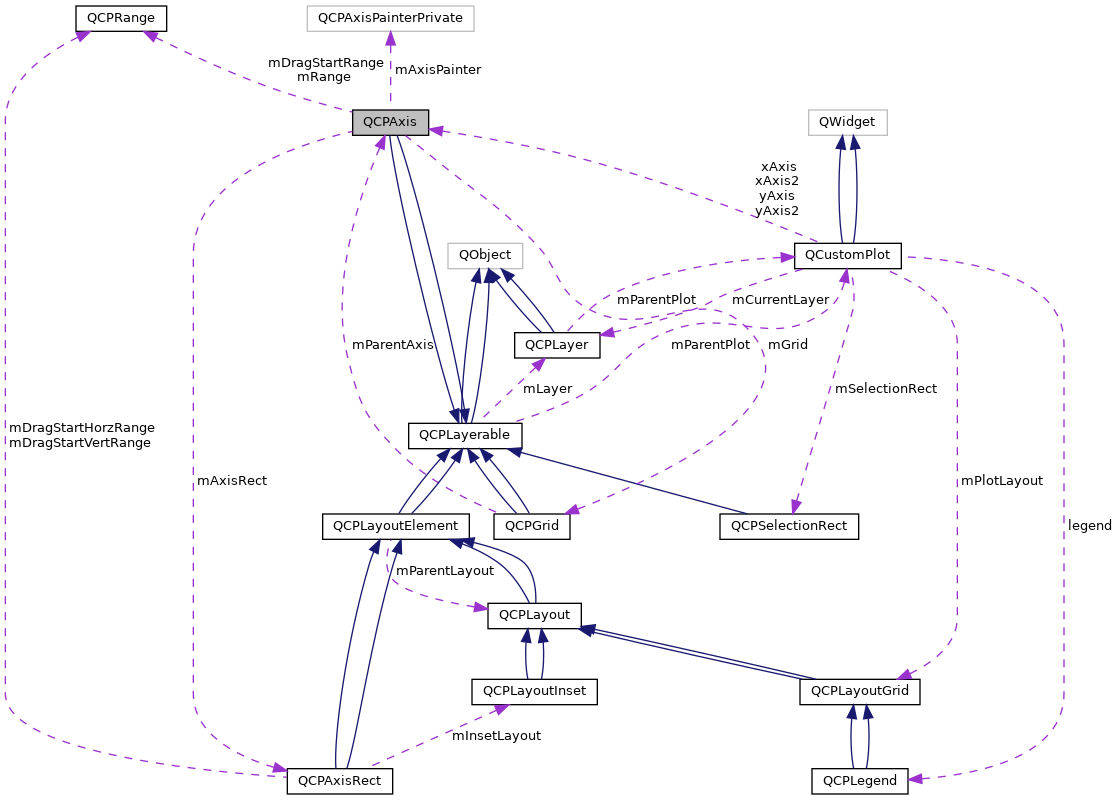
Manages a single axis inside a QCustomPlot. More...
#include <qcustomplot.h>

Public Types | |
| enum | AxisType { atLeft = 0x01 , atRight = 0x02 , atTop = 0x04 , atBottom = 0x08 , atLeft = 0x01 , atRight = 0x02 , atTop = 0x04 , atBottom = 0x08 } |
| enum | LabelSide { lsInside , lsOutside , lsInside , lsOutside } |
| enum | ScaleType { stLinear , stLogarithmic , stLinear , stLogarithmic } |
| enum | SelectablePart { spNone = 0 , spAxis = 0x001 , spTickLabels = 0x002 , spAxisLabel = 0x004 , spNone = 0 , spAxis = 0x001 , spTickLabels = 0x002 , spAxisLabel = 0x004 } |
| enum | AxisType { atLeft = 0x01 , atRight = 0x02 , atTop = 0x04 , atBottom = 0x08 , atLeft = 0x01 , atRight = 0x02 , atTop = 0x04 , atBottom = 0x08 } |
| enum | LabelType { ltNumber , ltDateTime } |
| enum | LabelSide { lsInside , lsOutside , lsInside , lsOutside } |
| enum | ScaleType { stLinear , stLogarithmic , stLinear , stLogarithmic } |
| enum | SelectablePart { spNone = 0 , spAxis = 0x001 , spTickLabels = 0x002 , spAxisLabel = 0x004 , spNone = 0 , spAxis = 0x001 , spTickLabels = 0x002 , spAxisLabel = 0x004 } |
Signals | |
| void | rangeChanged (const QCPRange &newRange) |
| void | rangeChanged (const QCPRange &newRange, const QCPRange &oldRange) |
| void | scaleTypeChanged (QCPAxis::ScaleType scaleType) |
| void | selectionChanged (const QCPAxis::SelectableParts &parts) |
| void | selectableChanged (const QCPAxis::SelectableParts &parts) |
| void | ticksRequest () |
| void | rangeChanged (const QCPRange &newRange) |
| void | rangeChanged (const QCPRange &newRange, const QCPRange &oldRange) |
| void | scaleTypeChanged (QCPAxis::ScaleType scaleType) |
| void | selectionChanged (const QCPAxis::SelectableParts &parts) |
| void | selectableChanged (const QCPAxis::SelectableParts &parts) |
 Signals inherited from QCPLayerable Signals inherited from QCPLayerable | |
| void | layerChanged (QCPLayer *newLayer) |
| void | layerChanged (QCPLayer *newLayer) |
Public Member Functions | |
| QCPAxis (QCPAxisRect *parent, AxisType type) | |
| virtual | ~QCPAxis () |
| AxisType | axisType () const |
| QCPAxisRect * | axisRect () const |
| ScaleType | scaleType () const |
| const QCPRange | range () const |
| bool | rangeReversed () const |
| QSharedPointer< QCPAxisTicker > | ticker () const |
| bool | ticks () const |
| bool | tickLabels () const |
| int | tickLabelPadding () const |
| QFont | tickLabelFont () const |
| QColor | tickLabelColor () const |
| double | tickLabelRotation () const |
| LabelSide | tickLabelSide () const |
| QString | numberFormat () const |
| int | numberPrecision () const |
| QVector< double > | tickVector () const |
| QVector< QString > | tickVectorLabels () const |
| int | tickLengthIn () const |
| int | tickLengthOut () const |
| bool | subTicks () const |
| int | subTickLengthIn () const |
| int | subTickLengthOut () const |
| QPen | basePen () const |
| QPen | tickPen () const |
| QPen | subTickPen () const |
| QFont | labelFont () const |
| QColor | labelColor () const |
| QString | label () const |
| int | labelPadding () const |
| int | padding () const |
| int | offset () const |
| SelectableParts | selectedParts () const |
| SelectableParts | selectableParts () const |
| QFont | selectedTickLabelFont () const |
| QFont | selectedLabelFont () const |
| QColor | selectedTickLabelColor () const |
| QColor | selectedLabelColor () const |
| QPen | selectedBasePen () const |
| QPen | selectedTickPen () const |
| QPen | selectedSubTickPen () const |
| QCPLineEnding | lowerEnding () const |
| QCPLineEnding | upperEnding () const |
| QCPGrid * | grid () const |
| Q_SLOT void | setScaleType (QCPAxis::ScaleType type) |
| Q_SLOT void | setRange (const QCPRange &range) |
| void | setRange (double lower, double upper) |
| void | setRange (double position, double size, Qt::AlignmentFlag alignment) |
| void | setRangeLower (double lower) |
| void | setRangeUpper (double upper) |
| void | setRangeReversed (bool reversed) |
| void | setTicker (QSharedPointer< QCPAxisTicker > ticker) |
| void | setTicks (bool show) |
| void | setTickLabels (bool show) |
| void | setTickLabelPadding (int padding) |
| void | setTickLabelFont (const QFont &font) |
| void | setTickLabelColor (const QColor &color) |
| void | setTickLabelRotation (double degrees) |
| void | setTickLabelSide (LabelSide side) |
| void | setNumberFormat (const QString &formatCode) |
| void | setNumberPrecision (int precision) |
| void | setTickLength (int inside, int outside=0) |
| void | setTickLengthIn (int inside) |
| void | setTickLengthOut (int outside) |
| void | setSubTicks (bool show) |
| void | setSubTickLength (int inside, int outside=0) |
| void | setSubTickLengthIn (int inside) |
| void | setSubTickLengthOut (int outside) |
| void | setBasePen (const QPen &pen) |
| void | setTickPen (const QPen &pen) |
| void | setSubTickPen (const QPen &pen) |
| void | setLabelFont (const QFont &font) |
| void | setLabelColor (const QColor &color) |
| void | setLabel (const QString &str) |
| void | setLabelPadding (int padding) |
| void | setPadding (int padding) |
| void | setOffset (int offset) |
| void | setSelectedTickLabelFont (const QFont &font) |
| void | setSelectedLabelFont (const QFont &font) |
| void | setSelectedTickLabelColor (const QColor &color) |
| void | setSelectedLabelColor (const QColor &color) |
| void | setSelectedBasePen (const QPen &pen) |
| void | setSelectedTickPen (const QPen &pen) |
| void | setSelectedSubTickPen (const QPen &pen) |
| Q_SLOT void | setSelectableParts (const QCPAxis::SelectableParts &selectableParts) |
| Q_SLOT void | setSelectedParts (const QCPAxis::SelectableParts &selectedParts) |
| void | setLowerEnding (const QCPLineEnding &ending) |
| void | setUpperEnding (const QCPLineEnding &ending) |
| virtual double | selectTest (const QPointF &pos, bool onlySelectable, QVariant *details=0) const |
| Qt::Orientation | orientation () const |
| int | pixelOrientation () const |
| void | moveRange (double diff) |
| void | scaleRange (double factor) |
| void | scaleRange (double factor, double center) |
| void | setScaleRatio (const QCPAxis *otherAxis, double ratio=1.0) |
| void | rescale (bool onlyVisiblePlottables=false) |
| double | pixelToCoord (double value) const |
| double | coordToPixel (double value) const |
| SelectablePart | getPartAt (const QPointF &pos) const |
| QList< QCPAbstractPlottable * > | plottables () const |
| QList< QCPGraph * > | graphs () const |
| QList< QCPAbstractItem * > | items () const |
| QCPAxis (QCPAxisRect *parent, AxisType type) | |
| virtual | ~QCPAxis () |
| AxisType | axisType () const |
| QCPAxisRect * | axisRect () const |
| ScaleType | scaleType () const |
| double | scaleLogBase () const |
| const QCPRange | range () const |
| bool | rangeReversed () const |
| bool | autoTicks () const |
| int | autoTickCount () const |
| bool | autoTickLabels () const |
| bool | autoTickStep () const |
| bool | autoSubTicks () const |
| bool | ticks () const |
| bool | tickLabels () const |
| int | tickLabelPadding () const |
| LabelType | tickLabelType () const |
| QFont | tickLabelFont () const |
| QColor | tickLabelColor () const |
| double | tickLabelRotation () const |
| LabelSide | tickLabelSide () const |
| QString | dateTimeFormat () const |
| Qt::TimeSpec | dateTimeSpec () const |
| QString | numberFormat () const |
| int | numberPrecision () const |
| double | tickStep () const |
| QVector< double > | tickVector () const |
| QVector< QString > | tickVectorLabels () const |
| int | tickLengthIn () const |
| int | tickLengthOut () const |
| int | subTickCount () const |
| int | subTickLengthIn () const |
| int | subTickLengthOut () const |
| QPen | basePen () const |
| QPen | tickPen () const |
| QPen | subTickPen () const |
| QFont | labelFont () const |
| QColor | labelColor () const |
| QString | label () const |
| int | labelPadding () const |
| int | padding () const |
| int | offset () const |
| SelectableParts | selectedParts () const |
| SelectableParts | selectableParts () const |
| QFont | selectedTickLabelFont () const |
| QFont | selectedLabelFont () const |
| QColor | selectedTickLabelColor () const |
| QColor | selectedLabelColor () const |
| QPen | selectedBasePen () const |
| QPen | selectedTickPen () const |
| QPen | selectedSubTickPen () const |
| QCPLineEnding | lowerEnding () const |
| QCPLineEnding | upperEnding () const |
| QCPGrid * | grid () const |
| Q_SLOT void | setScaleType (QCPAxis::ScaleType type) |
| void | setScaleLogBase (double base) |
| Q_SLOT void | setRange (const QCPRange &range) |
| void | setRange (double lower, double upper) |
| void | setRange (double position, double size, Qt::AlignmentFlag alignment) |
| void | setRangeLower (double lower) |
| void | setRangeUpper (double upper) |
| void | setRangeReversed (bool reversed) |
| void | setAutoTicks (bool on) |
| void | setAutoTickCount (int approximateCount) |
| void | setAutoTickLabels (bool on) |
| void | setAutoTickStep (bool on) |
| void | setAutoSubTicks (bool on) |
| void | setTicks (bool show) |
| void | setTickLabels (bool show) |
| void | setTickLabelPadding (int padding) |
| void | setTickLabelType (LabelType type) |
| void | setTickLabelFont (const QFont &font) |
| void | setTickLabelColor (const QColor &color) |
| void | setTickLabelRotation (double degrees) |
| void | setTickLabelSide (LabelSide side) |
| void | setDateTimeFormat (const QString &format) |
| void | setDateTimeSpec (const Qt::TimeSpec &timeSpec) |
| void | setNumberFormat (const QString &formatCode) |
| void | setNumberPrecision (int precision) |
| void | setTickStep (double step) |
| void | setTickVector (const QVector< double > &vec) |
| void | setTickVectorLabels (const QVector< QString > &vec) |
| void | setTickLength (int inside, int outside=0) |
| void | setTickLengthIn (int inside) |
| void | setTickLengthOut (int outside) |
| void | setSubTickCount (int count) |
| void | setSubTickLength (int inside, int outside=0) |
| void | setSubTickLengthIn (int inside) |
| void | setSubTickLengthOut (int outside) |
| void | setBasePen (const QPen &pen) |
| void | setTickPen (const QPen &pen) |
| void | setSubTickPen (const QPen &pen) |
| void | setLabelFont (const QFont &font) |
| void | setLabelColor (const QColor &color) |
| void | setLabel (const QString &str) |
| void | setLabelPadding (int padding) |
| void | setPadding (int padding) |
| void | setOffset (int offset) |
| void | setSelectedTickLabelFont (const QFont &font) |
| void | setSelectedLabelFont (const QFont &font) |
| void | setSelectedTickLabelColor (const QColor &color) |
| void | setSelectedLabelColor (const QColor &color) |
| void | setSelectedBasePen (const QPen &pen) |
| void | setSelectedTickPen (const QPen &pen) |
| void | setSelectedSubTickPen (const QPen &pen) |
| Q_SLOT void | setSelectableParts (const QCPAxis::SelectableParts &selectableParts) |
| Q_SLOT void | setSelectedParts (const QCPAxis::SelectableParts &selectedParts) |
| void | setLowerEnding (const QCPLineEnding &ending) |
| void | setUpperEnding (const QCPLineEnding &ending) |
| virtual double | selectTest (const QPointF &pos, bool onlySelectable, QVariant *details=0) const |
| Qt::Orientation | orientation () const |
| void | moveRange (double diff) |
| void | scaleRange (double factor, double center) |
| void | setScaleRatio (const QCPAxis *otherAxis, double ratio=1.0) |
| void | rescale (bool onlyVisiblePlottables=false) |
| double | pixelToCoord (double value) const |
| double | coordToPixel (double value) const |
| SelectablePart | getPartAt (const QPointF &pos) const |
| QList< QCPAbstractPlottable * > | plottables () const |
| QList< QCPGraph * > | graphs () const |
| QList< QCPAbstractItem * > | items () const |
| Public Member Functions inherited from QCPLayerable | |
| QCPLayerable (QCustomPlot *plot, QString targetLayer=QString(), QCPLayerable *parentLayerable=0) | |
| virtual | ~QCPLayerable () |
| bool | visible () const |
| QCustomPlot * | parentPlot () const |
| QCPLayerable * | parentLayerable () const |
| QCPLayer * | layer () const |
| bool | antialiased () const |
| void | setVisible (bool on) |
| Q_SLOT bool | setLayer (QCPLayer *layer) |
| bool | setLayer (const QString &layerName) |
| void | setAntialiased (bool enabled) |
| bool | realVisibility () const |
| QCPLayerable (QCustomPlot *plot, QString targetLayer=QString(), QCPLayerable *parentLayerable=0) | |
| ~QCPLayerable () | |
| bool | visible () const |
| QCustomPlot * | parentPlot () const |
| QCPLayerable * | parentLayerable () const |
| QCPLayer * | layer () const |
| bool | antialiased () const |
| void | setVisible (bool on) |
| Q_SLOT bool | setLayer (QCPLayer *layer) |
| bool | setLayer (const QString &layerName) |
| void | setAntialiased (bool enabled) |
| bool | realVisibility () const |
Static Public Member Functions | |
| static AxisType | marginSideToAxisType (QCP::MarginSide side) |
| static Qt::Orientation | orientation (AxisType type) |
| static AxisType | opposite (AxisType type) |
| static AxisType | marginSideToAxisType (QCP::MarginSide side) |
| static Qt::Orientation | orientation (AxisType type) |
| static AxisType | opposite (AxisType type) |
Protected Member Functions | |
| virtual int | calculateMargin () |
| virtual void | applyDefaultAntialiasingHint (QCPPainter *painter) const |
| virtual void | draw (QCPPainter *painter) |
| virtual QCP::Interaction | selectionCategory () const |
| virtual void | selectEvent (QMouseEvent *event, bool additive, const QVariant &details, bool *selectionStateChanged) |
| virtual void | deselectEvent (bool *selectionStateChanged) |
| virtual void | mousePressEvent (QMouseEvent *event, const QVariant &details) |
| virtual void | mouseMoveEvent (QMouseEvent *event, const QPointF &startPos) |
| virtual void | mouseReleaseEvent (QMouseEvent *event, const QPointF &startPos) |
| virtual void | wheelEvent (QWheelEvent *event) |
| void | setupTickVectors () |
| QPen | getBasePen () const |
| QPen | getTickPen () const |
| QPen | getSubTickPen () const |
| QFont | getTickLabelFont () const |
| QFont | getLabelFont () const |
| QColor | getTickLabelColor () const |
| QColor | getLabelColor () const |
| virtual void | setupTickVectors () |
| virtual void | generateAutoTicks () |
| virtual int | calculateAutoSubTickCount (double tickStep) const |
| virtual int | calculateMargin () |
| virtual void | applyDefaultAntialiasingHint (QCPPainter *painter) const |
| virtual void | draw (QCPPainter *painter) |
| virtual QCP::Interaction | selectionCategory () const |
| virtual void | selectEvent (QMouseEvent *event, bool additive, const QVariant &details, bool *selectionStateChanged) |
| virtual void | deselectEvent (bool *selectionStateChanged) |
| void | visibleTickBounds (int &lowIndex, int &highIndex) const |
| double | baseLog (double value) const |
| double | basePow (double value) const |
| QPen | getBasePen () const |
| QPen | getTickPen () const |
| QPen | getSubTickPen () const |
| QFont | getTickLabelFont () const |
| QFont | getLabelFont () const |
| QColor | getTickLabelColor () const |
| QColor | getLabelColor () const |
| Protected Member Functions inherited from QCPLayerable | |
| virtual void | parentPlotInitialized (QCustomPlot *parentPlot) |
| virtual QRect | clipRect () const |
| virtual void | mouseDoubleClickEvent (QMouseEvent *event, const QVariant &details) |
| void | initializeParentPlot (QCustomPlot *parentPlot) |
| void | setParentLayerable (QCPLayerable *parentLayerable) |
| bool | moveToLayer (QCPLayer *layer, bool prepend) |
| void | applyAntialiasingHint (QCPPainter *painter, bool localAntialiased, QCP::AntialiasedElement overrideElement) const |
| virtual void | parentPlotInitialized (QCustomPlot *parentPlot) |
| virtual QRect | clipRect () const |
| void | initializeParentPlot (QCustomPlot *parentPlot) |
| void | setParentLayerable (QCPLayerable *parentLayerable) |
| bool | moveToLayer (QCPLayer *layer, bool prepend) |
| void | applyAntialiasingHint (QCPPainter *painter, bool localAntialiased, QCP::AntialiasedElement overrideElement) const |
Manages a single axis inside a QCustomPlot.
Usually doesn't need to be instantiated externally. Access QCustomPlot's default four axes via QCustomPlot::xAxis (bottom), QCustomPlot::yAxis (left), QCustomPlot::xAxis2 (top) and QCustomPlot::yAxis2 (right).
Axes are always part of an axis rect, see QCPAxisRect.


Each axis holds an instance of QCPAxisTicker which is used to generate the tick coordinates and tick labels. You can access the currently installed ticker or set a new one (possibly one of the specialized subclasses, or your own subclass) via setTicker. For details, see the documentation of QCPAxisTicker.
Usually doesn't need to be instantiated externally. Access QCustomPlot's default four axes via QCustomPlot::xAxis (bottom), QCustomPlot::yAxis (left), QCustomPlot::xAxis2 (top) and QCustomPlot::yAxis2 (right).
Axes are always part of an axis rect, see QCPAxisRect.
Definition at line 2254 of file qcustomplot.h.
| enum QCPAxis::AxisType |
Defines at which side of the axis rect the axis will appear. This also affects how the tick marks are drawn, on which side the labels are placed etc.
Definition at line 2324 of file qcustomplot.h.
| enum QCPAxis::AxisType |
Defines at which side of the axis rect the axis will appear. This also affects how the tick marks are drawn, on which side the labels are placed etc.
Definition at line 1282 of file qcustomplot.h.
| enum QCPAxis::LabelSide |
Defines on which side of the axis the tick labels (numbers) shall appear.
Definition at line 2345 of file qcustomplot.h.
| enum QCPAxis::LabelSide |
Defines on which side of the axis the tick labels (numbers) shall appear.
Definition at line 1319 of file qcustomplot.h.
| enum QCPAxis::LabelType |
When automatic tick label generation is enabled (setAutoTickLabels), defines how the coordinate of the tick is interpreted, i.e. translated into a string.
| Enumerator | |
|---|---|
| ltNumber | Tick coordinate is regarded as normal number and will be displayed as such. (see setNumberFormat) |
| ltDateTime | Tick coordinate is regarded as a date/time (seconds since 1970-01-01T00:00:00 UTC) and will be displayed and formatted as such. (for details, see setDateTimeFormat) |
Definition at line 1304 of file qcustomplot.h.
| enum QCPAxis::ScaleType |
Defines the scale of an axis.
| Enumerator | |
|---|---|
| stLinear | Linear scaling. |
| stLogarithmic | Logarithmic scaling with correspondingly transformed axis coordinates (possibly also setTicker to a QCPAxisTickerLog instance). Logarithmic scaling with correspondingly transformed plots and (major) tick marks at every base power (see setScaleLogBase). |
| stLinear | Linear scaling. |
| stLogarithmic | Logarithmic scaling with correspondingly transformed axis coordinates (possibly also setTicker to a QCPAxisTickerLog instance). Logarithmic scaling with correspondingly transformed plots and (major) tick marks at every base power (see setScaleLogBase). |
Definition at line 2356 of file qcustomplot.h.
| enum QCPAxis::ScaleType |
Defines the scale of an axis.
| Enumerator | |
|---|---|
| stLinear | Linear scaling. |
| stLogarithmic | Logarithmic scaling with correspondingly transformed axis coordinates (possibly also setTicker to a QCPAxisTickerLog instance). Logarithmic scaling with correspondingly transformed plots and (major) tick marks at every base power (see setScaleLogBase). |
| stLinear | Linear scaling. |
| stLogarithmic | Logarithmic scaling with correspondingly transformed axis coordinates (possibly also setTicker to a QCPAxisTickerLog instance). Logarithmic scaling with correspondingly transformed plots and (major) tick marks at every base power (see setScaleLogBase). |
Definition at line 1330 of file qcustomplot.h.
Defines the selectable parts of an axis.
Definition at line 2368 of file qcustomplot.h.
Defines the selectable parts of an axis.
Definition at line 1342 of file qcustomplot.h.
|
explicit |
Constructs an Axis instance of Type type for the axis rect parent.
Usually it isn't necessary to instantiate axes directly, because you can let QCustomPlot create them for you with QCPAxisRect::addAxis. If you want to use own QCPAxis-subclasses however, create them manually and then inject them also via QCPAxisRect::addAxis.
Definition at line 7698 of file qcustomplot.cpp.
References atBottom, atLeft, atRight, atTop, mGrid, QCPLayerable::mParentPlot, QCPLayerable::setAntialiased(), setLabelPadding(), QCPLayerable::setLayer(), setTickLabelPadding(), QCPLayerable::setVisible(), and type.
|
virtual |
Definition at line 7767 of file qcustomplot.cpp.
References mAxisPainter, and mGrid.
|
explicit |
|
virtual |
|
protectedvirtual |
Implements QCPLayerable.
Definition at line 9134 of file qcustomplot.cpp.
References QCP::aeAxes, QCPLayerable::applyAntialiasingHint(), and QCPLayerable::mAntialiased.
|
protectedvirtual |
Implements QCPLayerable.
|
inline |
Definition at line 1369 of file qcustomplot.h.
|
inline |
Definition at line 1366 of file qcustomplot.h.
|
inline |
Definition at line 1367 of file qcustomplot.h.
|
inline |
Definition at line 1365 of file qcustomplot.h.
|
inline |
Definition at line 1368 of file qcustomplot.h.
|
inline |
Definition at line 2387 of file qcustomplot.h.
Referenced by QCPAxisRect::addAxis(), QCPGraph::getFillBasePoint(), QCPGraph::lowerFillBasePoint(), QCustomPlot::plottableAt(), setScaleRatio(), and QCPGraph::upperFillBasePoint().
|
inline |
Definition at line 1360 of file qcustomplot.h.
|
inline |
Definition at line 2386 of file qcustomplot.h.
Referenced by QCPAxisRect::addAxis(), QCPGraph::getFillBasePoint(), QCPGraph::lowerFillBasePoint(), and QCPGraph::upperFillBasePoint().
|
inline |
Definition at line 1359 of file qcustomplot.h.
|
protected |
Definition at line 5917 of file qcustomplot.cpp.
References mScaleLogBaseLogInv.
Referenced by generateAutoTicks().
|
inline |
Definition at line 2408 of file qcustomplot.h.
|
inline |
Definition at line 1390 of file qcustomplot.h.
|
protected |
Definition at line 5928 of file qcustomplot.cpp.
References mScaleLogBase.
Referenced by generateAutoTicks().
|
protectedvirtual |
Definition at line 5673 of file qcustomplot.cpp.
References mSubTickCount, result, and tickStep().
Referenced by generateAutoTicks().
|
protectedvirtual |
Definition at line 9298 of file qcustomplot.cpp.
References coordToPixel(), getLabelFont(), mAxisPainter, mAxisRect, mAxisType, mCachedMargin, mCachedMarginValid, mLabel, mPadding, QCPLayerable::mParentPlot, mTickLabelFont, mTickLabels, mTicks, mTickVector, mTickVectorLabels, QCPLayerable::mVisible, QCPLayoutElement::rect(), tickLabels(), and QCustomPlot::viewport().
|
protectedvirtual |
| double QCPAxis::coordToPixel | ( | double | value | ) | const |
Transforms value, in coordinates of the axis, to pixel coordinates of the QCustomPlot widget.
Definition at line 8735 of file qcustomplot.cpp.
References QCPAxisRect::bottom(), QCPAxisRect::height(), QCPAxisRect::left(), QCPRange::lower, mAxisRect, mRange, mRangeReversed, mScaleType, orientation(), QCPAxisRect::right(), QCPRange::size(), stLinear, QCPAxisRect::top(), QCPRange::upper, and QCPAxisRect::width().
Referenced by calculateMargin(), QCPFinancial::candlestickSelectTest(), QCPAbstractPlottable::coordsToPixels(), QCPBars::dataPixelPosition(), QCPGraph::dataToImpulseLines(), QCPGraph::dataToLines(), QCPGraph::dataToStepCenterLines(), QCPGraph::dataToStepLeftLines(), QCPGraph::dataToStepRightLines(), QCPHiddenArea::draw(), QCPArrow::draw(), draw(), QCPFinancial::drawCandlestickPlot(), QCPGraph::drawError(), QCPGrid::drawGridLines(), QCPFinancial::drawOhlcPlot(), QCPGraph::drawScatterPlot(), QCPGrid::drawSubGridLines(), QCPBars::getBarPolygon(), QCPBars::getBarRect(), QCPCurve::getCurveData(), QCPCurve::getCurveLines(), QCPErrorBars::getErrorBarLines(), QCPGraph::getFillBasePoint(), QCPGraph::getImpulsePlotData(), QCPGraph::getLinePlotData(), QCPGraph::getOptimizedLineData(), QCPGraph::getOptimizedScatterData(), QCPSelectionDecoratorBracket::getPixelCoordinates(), QCPGraph::getPreparedData(), QCPGraph::getScatters(), QCPCurve::getScatters(), QCPGraph::getStepCenterPlotData(), QCPGraph::getStepLeftPlotData(), QCPGraph::getStepRightPlotData(), QCPGraph::lowerFillBasePoint(), QCPFinancial::ohlcSelectTest(), QCPFinancial::selectionHitBox(), and QCPGraph::upperFillBasePoint().
| double QCPAxis::coordToPixel | ( | double | value | ) | const |
|
inline |
Definition at line 1378 of file qcustomplot.h.
|
inline |
Definition at line 1379 of file qcustomplot.h.
|
protectedvirtual |
Reimplemented from QCPLayerable.
Definition at line 8972 of file qcustomplot.cpp.
References mSelectableParts, mSelectedParts, and setSelectedParts().
|
protectedvirtual |
Reimplemented from QCPLayerable.
|
protectedvirtual |
Implements QCPLayerable.
Definition at line 9145 of file qcustomplot.cpp.
References coordToPixel(), getBasePen(), getLabelColor(), getLabelFont(), getSubTickPen(), getTickLabelColor(), getTickLabelFont(), getTickPen(), mAxisPainter, mAxisRect, mAxisType, mLabel, mNumberBeautifulPowers, QCPLayerable::mParentPlot, mRangeReversed, mScaleType, mSubTicks, mSubTickVector, mTickLabels, mTicks, mTickVector, mTickVectorLabels, QCPLayoutElement::rect(), stLogarithmic, subTickCount(), tickLabels(), and QCustomPlot::viewport().
|
protectedvirtual |
Implements QCPLayerable.
|
protectedvirtual |
Definition at line 5582 of file qcustomplot.cpp.
References baseLog(), basePow(), calculateAutoSubTickCount(), cloudViewer::utility::ceil(), e, cloudViewer::utility::floor(), QCPRange::lower, mAutoSubTicks, mAutoTickCount, mAutoTickStep, mRange, mScaleLogBase, mScaleType, mSubTickCount, mTickStep, mTickVector, QCPRange::size(), stLinear, and QCPRange::upper.
|
protected |
Definition at line 9220 of file qcustomplot.cpp.
References mBasePen, mSelectedBasePen, mSelectedParts, and spAxis.
Referenced by draw().
|
protected |
|
protected |
Definition at line 9277 of file qcustomplot.cpp.
References mLabelColor, mSelectedLabelColor, mSelectedParts, and spAxisLabel.
Referenced by draw().
|
protected |
|
protected |
Definition at line 9257 of file qcustomplot.cpp.
References mLabelFont, mSelectedLabelFont, mSelectedParts, and spAxisLabel.
Referenced by calculateMargin(), and draw().
|
protected |
| QCPAxis::SelectablePart QCPAxis::getPartAt | ( | const QPointF & | pos | ) | const |
Returns the part of the axis that is hit by pos (in pixels). The return value of this function is independent of the user-selectable parts defined with setSelectableParts. Further, this function does not change the current selection state of the axis.
If the axis is not visible (setVisible), this function always returns spNone.
Definition at line 8823 of file qcustomplot.cpp.
References mAxisPainter, QCPLayerable::mVisible, spAxis, spAxisLabel, spNone, and spTickLabels.
Referenced by selectTest().
| SelectablePart QCPAxis::getPartAt | ( | const QPointF & | pos | ) | const |
|
protected |
Definition at line 9238 of file qcustomplot.cpp.
References mSelectedParts, mSelectedSubTickPen, mSubTickPen, and spAxis.
Referenced by draw().
|
protected |
|
protected |
Definition at line 9267 of file qcustomplot.cpp.
References mSelectedParts, mSelectedTickLabelColor, mTickLabelColor, and spTickLabels.
Referenced by draw().
|
protected |
|
protected |
Definition at line 9247 of file qcustomplot.cpp.
References mSelectedParts, mSelectedTickLabelFont, mTickLabelFont, and spTickLabels.
Referenced by draw().
|
protected |
|
protected |
Definition at line 9229 of file qcustomplot.cpp.
References mSelectedParts, mSelectedTickPen, mTickPen, and spAxis.
Referenced by draw().
|
protected |
| QList< QCPGraph * > QCPAxis::graphs | ( | ) | const |
Returns a list of all the graphs that have this axis as key or value axis.
Definition at line 8873 of file qcustomplot.cpp.
References QCustomPlot::mGraphs, QCPLayerable::mParentPlot, and result.
| QList<QCPGraph *> QCPAxis::graphs | ( | ) | const |
|
inline |
Returns the QCPGrid instance belonging to this axis. Access it to set details about the way the grid is displayed.
Definition at line 2428 of file qcustomplot.h.
Referenced by QCPAxisRect::QCPAxisRect(), and QCustomPlot::QCustomPlot().
|
inline |
Definition at line 1410 of file qcustomplot.h.
| QList< QCPAbstractItem * > QCPAxis::items | ( | ) | const |
Returns a list of all the items that are associated with this axis. An item is considered associated with an axis if at least one of its positions uses the axis as key or value axis.
Definition at line 8892 of file qcustomplot.cpp.
References QCustomPlot::mItems, QCPLayerable::mParentPlot, and result.
| QList<QCPAbstractItem *> QCPAxis::items | ( | ) | const |
|
inline |
Definition at line 2413 of file qcustomplot.h.
|
inline |
Definition at line 1395 of file qcustomplot.h.
|
inline |
Definition at line 2412 of file qcustomplot.h.
|
inline |
Definition at line 1394 of file qcustomplot.h.
|
inline |
Definition at line 2411 of file qcustomplot.h.
|
inline |
Definition at line 1393 of file qcustomplot.h.
| int QCPAxis::labelPadding | ( | ) | const |
Definition at line 7810 of file qcustomplot.cpp.
References mAxisPainter.
| int QCPAxis::labelPadding | ( | ) | const |
| QCPLineEnding QCPAxis::lowerEnding | ( | ) | const |
Definition at line 7816 of file qcustomplot.cpp.
References mAxisPainter.
| QCPLineEnding QCPAxis::lowerEnding | ( | ) | const |
|
static |
Transforms a margin side to the logically corresponding axis type. (QCP::msLeft to QCPAxis::atLeft, QCP::msRight to QCPAxis::atRight, etc.)
Definition at line 8914 of file qcustomplot.cpp.
References atBottom, atLeft, atRight, atTop, QCP::msBottom, QCP::msLeft, QCP::msRight, and QCP::msTop.
Referenced by QCPAxisRect::calculateAutoMargin().
|
static |
|
protectedvirtual |
This event gets called when the user moves the mouse while holding a mouse button, after this layerable has become the mouse grabber by accepting the preceding mousePressEvent.
The current pixel position of the cursor on the QCustomPlot widget is accessible via event->pos(). The parameter startPos indicates the position where the initial mousePressEvent occured, that started the mouse interaction.
The default implementation does nothing.
Reimplemented from QCPLayerable.
Definition at line 9031 of file qcustomplot.cpp.
References QCP::aeAll, QCPRange::lower, mDragging, mDragStartRange, QCPLayerable::mParentPlot, mScaleType, QCustomPlot::noAntialiasingOnDrag(), orientation(), pixelToCoord(), QCustomPlot::replot(), QCustomPlot::rpQueuedReplot, QCustomPlot::setNotAntialiasedElements(), setRange(), stLinear, stLogarithmic, and QCPRange::upper.
|
protectedvirtual |
This event gets called when the user presses a mouse button while the cursor is over the layerable. Whether a cursor is over the layerable is decided by a preceding call to selectTest.
The current pixel position of the cursor on the QCustomPlot widget is accessible via event->pos(). The parameter details contains layerable-specific details about the hit, which were generated in the previous call to selectTest. For example, One-dimensional plottables like QCPGraph or QCPBars convey the clicked data point in the details parameter, as QCPDataSelection packed as QVariant. Multi-part objects convey the specific SelectablePart that was hit (e.g. QCPAxis::SelectablePart in the case of axes).
QCustomPlot uses an event propagation system that works the same as Qt's system. If your layerable doesn't reimplement the mousePressEvent or explicitly calls event->ignore() in its reimplementation, the event will be propagated to the next layerable in the stacking order.
Once a layerable has accepted the mousePressEvent, it is considered the mouse grabber and will receive all following calls to mouseMoveEvent or mouseReleaseEvent for this mouse interaction (a "mouse interaction" in this context ends with the release).
The default implementation does nothing except explicitly ignoring the event with event->ignore().
Reimplemented from QCPLayerable.
Definition at line 8996 of file qcustomplot.cpp.
References QCustomPlot::antialiasedElements(), event, QCustomPlot::interactions(), QCP::iRangeDrag, mAADragBackup, mAxisRect, mDragging, mDragStartRange, mNotAADragBackup, QCPLayerable::mParentPlot, mRange, QCustomPlot::noAntialiasingOnDrag(), QCustomPlot::notAntialiasedElements(), orientation(), QCPAxisRect::rangeDrag(), and QCPAxisRect::rangeDragAxes().
|
protectedvirtual |
This event gets called when the user releases the mouse button, after this layerable has become the mouse grabber by accepting the preceding mousePressEvent.
The current pixel position of the cursor on the QCustomPlot widget is accessible via event->pos(). The parameter startPos indicates the position where the initial mousePressEvent occured, that started the mouse interaction.
The default implementation does nothing.
Reimplemented from QCPLayerable.
Definition at line 9069 of file qcustomplot.cpp.
References event, mAADragBackup, mDragging, mNotAADragBackup, QCPLayerable::mParentPlot, QCustomPlot::noAntialiasingOnDrag(), QCustomPlot::setAntialiasedElements(), and QCustomPlot::setNotAntialiasedElements().
| void QCPAxis::moveRange | ( | double | diff | ) |
If the scale type (setScaleType) is stLinear, diff is added to the lower and upper bounds of the range. The range is simply moved by diff.
If the scale type is stLogarithmic, the range bounds are multiplied by diff. This corresponds to an apparent "linear" move in logarithmic scaling by a distance of log(diff).
Definition at line 8522 of file qcustomplot.cpp.
References QCPRange::lower, mRange, mScaleType, rangeChanged(), stLinear, and QCPRange::upper.
| void QCPAxis::moveRange | ( | double | diff | ) |
| QString QCPAxis::numberFormat | ( | ) | const |
Definition at line 7787 of file qcustomplot.cpp.
References mAxisPainter, mNumberBeautifulPowers, mNumberFormatChar, and result.
Referenced by QCPAxisRect::setupFullAxesBox().
| QString QCPAxis::numberFormat | ( | ) | const |
|
inline |
Definition at line 2400 of file qcustomplot.h.
Referenced by QCPAxisRect::setupFullAxesBox().
|
inline |
Definition at line 1381 of file qcustomplot.h.
| int QCPAxis::offset | ( | ) | const |
Definition at line 7813 of file qcustomplot.cpp.
References mAxisPainter.
Referenced by QCPAxisRect::removeAxis(), and setOffset().
| int QCPAxis::offset | ( | ) | const |
|
static |
|
inline |
Returns the orientation of this axis. The axis orientation (horizontal or vertical) is deduced from the axis type (left, top, right or bottom).
Returns the orientation of this axis. The axis orientation (horizontal or vertical) is deduced from the axis type (left, top, right or bottom).
Definition at line 2483 of file qcustomplot.h.
Referenced by QCPFinancial::candlestickSelectTest(), QCPAbstractPlottable::coordsToPixels(), coordToPixel(), QCPBars::dataPixelPosition(), QCPGraph::dataToImpulseLines(), QCPGraph::dataToLines(), QCPGraph::dataToStepCenterLines(), QCPGraph::dataToStepLeftLines(), QCPGraph::dataToStepRightLines(), QCPColorMap::draw(), QCPFinancial::drawCandlestickPlot(), QCPGraph::drawError(), QCPGrid::drawGridLines(), QCPFinancial::drawOhlcPlot(), QCPGraph::drawScatterPlot(), QCPGrid::drawSubGridLines(), QCPBars::getBarPolygon(), QCPBars::getBarRect(), QCPGraph::getChannelFillPolygon(), QCPCurve::getCurveData(), QCPErrorBars::getErrorBarLines(), QCPGraph::getFillBasePoint(), QCPGraph::getImpulsePlotData(), QCPGraph::getLinePlotData(), QCPSelectionDecoratorBracket::getPixelCoordinates(), QCPGraph::getPreparedData(), QCPGraph::getScatters(), QCPCurve::getScatters(), QCPGraph::getStepCenterPlotData(), QCPGraph::getStepLeftPlotData(), QCPGraph::getStepRightPlotData(), QCPGraph::lowerFillBasePoint(), mouseMoveEvent(), mousePressEvent(), QCPFinancial::ohlcSelectTest(), QCPAbstractPlottable::pixelsToCoords(), pixelToCoord(), QCPAbstractPlottable::QCPAbstractPlottable(), QCPSelectionRect::range(), QCPColorScale::rangeDrag(), QCPColorScale::rangeZoom(), QCPFinancial::selectionHitBox(), QCPColorScale::setRangeDrag(), QCPAxisRect::setRangeDragAxes(), QCPColorScale::setRangeZoom(), QCPAxisRect::setRangeZoomAxes(), setScaleRatio(), QCPColorMap::updateLegendIcon(), QCPColorMap::updateMapImage(), QCPGraph::upperFillBasePoint(), wheelEvent(), and QCPAxisRect::zoom().
|
inline |
Definition at line 1476 of file qcustomplot.h.
|
inlinestatic |
Returns the orientation of the specified axis type
Returns the orientation of the specified axis type
Definition at line 2500 of file qcustomplot.h.
References type.
|
inlinestatic |
Definition at line 1489 of file qcustomplot.h.
References type.
|
inline |
Definition at line 2415 of file qcustomplot.h.
Referenced by setLabelPadding(), setPadding(), and setTickLabelPadding().
|
inline |
Definition at line 1397 of file qcustomplot.h.
|
inline |
Returns which direction points towards higher coordinate values/keys, in pixel space.
This method returns either 1 or -1. If it returns 1, then going in the positive direction along the orientation of the axis in pixels corresponds to going from lower to higher axis coordinates. On the other hand, if this method returns -1, going to smaller pixel values corresponds to going from lower to higher axis coordinates.
For example, this is useful to easily shift axis coordinates by a certain amount given in pixels, without having to care about reversed or vertically aligned axes:
newKey will then contain a key that is ten pixels towards higher keys, starting from oldKey.
Definition at line 2484 of file qcustomplot.h.
Referenced by QCPBars::getBarRect(), QCPCurve::getCurveLines(), QCPErrorBars::getErrorBarLines(), QCPGraph::getOptimizedLineData(), QCPGraph::getOptimizedScatterData(), QCPCurve::getScatters(), and QCPBarsGroup::keyPixelOffset().
| double QCPAxis::pixelToCoord | ( | double | value | ) | const |
Transforms value, in pixel coordinates of the QCustomPlot widget, to axis coordinates.
Definition at line 8680 of file qcustomplot.cpp.
References QCPAxisRect::bottom(), QCPAxisRect::height(), QCPAxisRect::left(), QCPRange::lower, mAxisRect, mRange, mRangeReversed, mScaleType, orientation(), QCPRange::size(), stLinear, QCPRange::upper, and QCPAxisRect::width().
Referenced by QCPCurve::getCurveData(), QCPCurve::getCurveLines(), QCPErrorBars::getErrorBarLines(), QCPGraph::getOptimizedLineData(), QCPGraph::getOptimizedScatterData(), QCPGraph::getPreparedData(), QCPCurve::getScatters(), mouseMoveEvent(), QCPAxisRect::mouseMoveEvent(), QCPAbstractPlottable::pixelsToCoords(), QCPSelectableCursor::pixelToKey(), QCPSelectableCursor::pixelToValue(), QCPSelectionRect::range(), wheelEvent(), QCPAxisRect::wheelEvent(), and QCPAxisRect::zoom().
| double QCPAxis::pixelToCoord | ( | double | value | ) | const |
| QList< QCPAbstractPlottable * > QCPAxis::plottables | ( | ) | const |
Returns a list of all the plottables that have this axis as key or value axis.
If you are only interested in plottables of type QCPGraph, see graphs.
Definition at line 8856 of file qcustomplot.cpp.
References QCPLayerable::mParentPlot, QCustomPlot::mPlottables, and result.
Referenced by rescale().
| QList<QCPAbstractPlottable *> QCPAxis::plottables | ( | ) | const |
|
inline |
Definition at line 2389 of file qcustomplot.h.
Referenced by QCPGrid::drawGridLines(), QCPCurve::getCurveData(), QCPCurve::getCurveLines(), QCPGraph::getFillBasePoint(), QCPGraph::getOptimizedScatterData(), QCPGraph::getPreparedData(), QCPCurve::getScatters(), QCPErrorBars::getVisibleDataBounds(), QCPGraph::getVisibleDataBounds(), QCPGraph::lowerFillBasePoint(), QCPGraph::rescaleKeyAxis(), QCPAbstractPlottable::rescaleKeyAxis(), QCPGraph::rescaleValueAxis(), QCPAbstractPlottable::rescaleValueAxis(), scaleRange(), setRange(), setScaleRatio(), QCPAxisRect::setupFullAxesBox(), and QCPGraph::upperFillBasePoint().
|
inline |
Definition at line 1363 of file qcustomplot.h.
|
signal |
This signal is emitted when the range of this axis has changed. You can connect it to the setRange slot of another axis to communicate the new range to the other axis, in order for it to be synchronized.
You may also manipulate/correct the range with setRange in a slot connected to this signal. This is useful if for example a maximum range span shall not be exceeded, or if the lower/upper range shouldn't go beyond certain values (see QCPRange::bounded). For example, the following slot would limit the x axis to ranges between 0 and 10:
This signal is emitted when the range of this axis has changed. You can connect it to the setRange slot of another axis to communicate the new range to the other axis, in order for it to be synchronized.
You may also manipulate/correct the range with setRange in a slot connected to this signal. This is useful if for example a maximum range span shall not be exceeded, or if the lower/upper range shouldn't go beyond certain values. For example, the following slot would limit the x axis to only positive ranges:
Referenced by moveRange(), scaleRange(), setRange(), setRangeLower(), and setRangeUpper().
|
signal |
Additionally to the new range, this signal also provides the previous range held by the axis as oldRange.
|
inline |
Definition at line 2390 of file qcustomplot.h.
Referenced by QCPSelectionDecoratorBracket::drawDecoration(), QCPGraph::drawError(), QCPCurve::getCurveData(), QCPErrorBars::getErrorBarLines(), QCPGraph::getFillBasePoint(), QCPGraph::getPreparedData(), QCPGraph::lowerFillBasePoint(), QCPAxisRect::setupFullAxesBox(), and QCPGraph::upperFillBasePoint().
|
inline |
Definition at line 1364 of file qcustomplot.h.
| void QCPAxis::rescale | ( | bool | onlyVisiblePlottables = false | ) |
Changes the axis range such that all plottables associated with this axis are fully visible in that dimension.
Definition at line 8627 of file qcustomplot.cpp.
References QCPRange::expand(), QCPRange::lower, mRange, mScaleType, plottables(), QCP::sdBoth, QCP::sdNegative, QCP::sdPositive, setRange(), QCPRange::size(), stLinear, stLogarithmic, QCPRange::upper, and QCPRange::validRange().
Referenced by QCustomPlot::rescaleAxes().
| void QCPAxis::rescale | ( | bool | onlyVisiblePlottables = false | ) |
|
inline |
Definition at line 1362 of file qcustomplot.h.
| void QCPAxis::scaleRange | ( | double | factor | ) |
Scales the range of this axis by factor around the center of the current axis range. For example, if factor is 2.0, then the axis range will double its size, and the point at the axis range center won't have changed its position in the QCustomPlot widget (i.e. coordinates around the center will have moved symmetrically closer).
If you wish to scale around a different coordinate than the current axis range center, use the overload scaleRange(double factor, double center).
Definition at line 8546 of file qcustomplot.cpp.
References range().
Referenced by wheelEvent(), and QCPAxisRect::wheelEvent().
| void QCPAxis::scaleRange | ( | double | factor, |
| double | center | ||
| ) |
This is an overloaded member function, provided for convenience. It differs from the above function only in what argument(s) it accepts.
Scales the range of this axis by factor around the coordinate center. For example, if factor is 2.0, center is 1.0, then the axis range will double its size, and the point at coordinate 1.0 won't have changed its position in the QCustomPlot widget (i.e. coordinates around 1.0 will have moved symmetrically closer to 1.0).
Scales the range of this axis by factor around the coordinate center. For example, if factor is 2.0, center is 1.0, then the axis range will double its size, and the point at coordinate 1.0 won't have changed its position in the QCustomPlot widget (i.e. coordinates around 1.0 will have moved symmetrically closer to 1.0).
Definition at line 8560 of file qcustomplot.cpp.
References QCPRange::lower, mRange, mScaleType, rangeChanged(), QCPRange::sanitizedForLinScale(), QCPRange::sanitizedForLogScale(), stLinear, QCPRange::upper, and QCPRange::validRange().
| void QCPAxis::scaleRange | ( | double | factor, |
| double | center | ||
| ) |
|
inline |
Definition at line 2388 of file qcustomplot.h.
Referenced by QCPGraph::getFillBasePoint(), QCPGraph::getOptimizedLineData(), QCPGraph::getOptimizedScatterData(), QCPGraph::getPreparedData(), QCPGraph::lowerFillBasePoint(), QCPGraph::rescaleKeyAxis(), QCPAbstractPlottable::rescaleKeyAxis(), QCPGraph::rescaleValueAxis(), QCPAbstractPlottable::rescaleValueAxis(), QCPAxisRect::setupFullAxesBox(), and QCPGraph::upperFillBasePoint().
|
inline |
Definition at line 1361 of file qcustomplot.h.
|
signal |
This signal is emitted when the scale type changes, by calls to setScaleType
Referenced by setScaleType().
|
signal |
|
signal |
This signal is emitted when the selectability changes, by calls to setSelectableParts
|
signal |
|
inline |
Definition at line 2418 of file qcustomplot.h.
|
inline |
Definition at line 1400 of file qcustomplot.h.
|
inline |
Definition at line 2423 of file qcustomplot.h.
|
inline |
Definition at line 1405 of file qcustomplot.h.
|
inline |
Definition at line 2422 of file qcustomplot.h.
|
inline |
Definition at line 1404 of file qcustomplot.h.
|
inline |
Definition at line 2420 of file qcustomplot.h.
|
inline |
Definition at line 1402 of file qcustomplot.h.
|
inline |
Definition at line 2417 of file qcustomplot.h.
Referenced by QCustomPlot::selectedAxes().
|
inline |
Definition at line 1399 of file qcustomplot.h.
|
inline |
Definition at line 2425 of file qcustomplot.h.
|
inline |
Definition at line 1407 of file qcustomplot.h.
|
inline |
Definition at line 2421 of file qcustomplot.h.
|
inline |
Definition at line 1403 of file qcustomplot.h.
|
inline |
Definition at line 2419 of file qcustomplot.h.
|
inline |
Definition at line 1401 of file qcustomplot.h.
|
inline |
Definition at line 2424 of file qcustomplot.h.
|
inline |
Definition at line 1406 of file qcustomplot.h.
|
protectedvirtual |
Reimplemented from QCPLayerable.
Definition at line 8957 of file qcustomplot.cpp.
References event, mSelectableParts, mSelectedParts, and setSelectedParts().
|
protectedvirtual |
Reimplemented from QCPLayerable.
|
protectedvirtual |
Reimplemented from QCPLayerable.
Definition at line 9341 of file qcustomplot.cpp.
References QCP::iSelectAxes.
|
protectedvirtual |
Reimplemented from QCPLayerable.
|
signal |
|
signal |
|
virtual |
This function is used to decide whether a click hits a layerable object or not.
pos is a point in pixel coordinates on the QCustomPlot surface. This function returns the shortest pixel distance of this point to the object. If the object is either invisible or the distance couldn't be determined, -1.0 is returned. Further, if onlySelectable is true and the object is not selectable, -1.0 is returned, too.
If the object is represented not by single lines but by an area like a QCPItemText or the bars of a QCPBars plottable, a click inside the area should also be considered a hit. In these cases this function thus returns a constant value greater zero but still below the parent plot's selection tolerance. (typically the selectionTolerance multiplied by 0.99).
Providing a constant value for area objects allows selecting line objects even when they are obscured by such area objects, by clicking close to the lines (i.e. closer than 0.99*selectionTolerance).
The actual setting of the selection state is not done by this function. This is handled by the parent QCustomPlot when the mouseReleaseEvent occurs, and the finally selected object is notified via the selectEvent/ deselectEvent methods.
details is an optional output parameter. Every layerable subclass may place any information in details. This information will be passed to selectEvent when the parent QCustomPlot decides on the basis of this selectTest call, that the object was successfully selected. The subsequent call to selectEvent will carry the details. This is useful for multi-part objects (like QCPAxis). This way, a possibly complex calculation to decide which part was clicked is only done once in selectTest. The result (i.e. the actually clicked part) can then be placed in details. So in the subsequent selectEvent, the decision which part was selected doesn't have to be done a second time for a single selection operation.
In the case of 1D Plottables (QCPAbstractPlottable1D, like QCPGraph or QCPBars) details will be set to a QCPDataSelection, describing the closest data point to pos.
You may pass 0 as details to indicate that you are not interested in those selection details.
This function is used to decide whether a click hits a layerable object or not.
pos is a point in pixel coordinates on the QCustomPlot surface. This function returns the shortest pixel distance of this point to the object. If the object is either invisible or the distance couldn't be determined, -1.0 is returned. Further, if onlySelectable is true and the object is not selectable, -1.0 is returned, too.
If the object is represented not by single lines but by an area like a QCPItemText or the bars of a QCPBars plottable, a click inside the area should also be considered a hit. In these cases this function thus returns a constant value greater zero but still below the parent plot's selection tolerance. (typically the selectionTolerance multiplied by 0.99).
Providing a constant value for area objects allows selecting line objects even when they are obscured by such area objects, by clicking close to the lines (i.e. closer than 0.99*selectionTolerance).
The actual setting of the selection state is not done by this function. This is handled by the parent QCustomPlot when the mouseReleaseEvent occurs, and the finally selected object is notified via the selectEvent/deselectEvent methods.
details is an optional output parameter. Every layerable subclass may place any information in details. This information will be passed to selectEvent when the parent QCustomPlot decides on the basis of this selectTest call, that the object was successfully selected. The subsequent call to selectEvent will carry the details. This is useful for multi-part objects (like QCPAxis). This way, a possibly complex calculation to decide which part was clicked is only done once in selectTest. The result (i.e. the actually clicked part) can then be placed in details. So in the subsequent selectEvent, the decision which part was selected doesn't have to be done a second time for a single selection operation.
You may pass 0 as details to indicate that you are not interested in those selection details.
Reimplemented from QCPLayerable.
Definition at line 8837 of file qcustomplot.cpp.
References getPartAt(), QCPLayerable::mParentPlot, mSelectableParts, QCustomPlot::selectionTolerance(), and spNone.
|
virtual |
This function is used to decide whether a click hits a layerable object or not.
pos is a point in pixel coordinates on the QCustomPlot surface. This function returns the shortest pixel distance of this point to the object. If the object is either invisible or the distance couldn't be determined, -1.0 is returned. Further, if onlySelectable is true and the object is not selectable, -1.0 is returned, too.
If the object is represented not by single lines but by an area like a QCPItemText or the bars of a QCPBars plottable, a click inside the area should also be considered a hit. In these cases this function thus returns a constant value greater zero but still below the parent plot's selection tolerance. (typically the selectionTolerance multiplied by 0.99).
Providing a constant value for area objects allows selecting line objects even when they are obscured by such area objects, by clicking close to the lines (i.e. closer than 0.99*selectionTolerance).
The actual setting of the selection state is not done by this function. This is handled by the parent QCustomPlot when the mouseReleaseEvent occurs, and the finally selected object is notified via the selectEvent/ deselectEvent methods.
details is an optional output parameter. Every layerable subclass may place any information in details. This information will be passed to selectEvent when the parent QCustomPlot decides on the basis of this selectTest call, that the object was successfully selected. The subsequent call to selectEvent will carry the details. This is useful for multi-part objects (like QCPAxis). This way, a possibly complex calculation to decide which part was clicked is only done once in selectTest. The result (i.e. the actually clicked part) can then be placed in details. So in the subsequent selectEvent, the decision which part was selected doesn't have to be done a second time for a single selection operation.
In the case of 1D Plottables (QCPAbstractPlottable1D, like QCPGraph or QCPBars) details will be set to a QCPDataSelection, describing the closest data point to pos.
You may pass 0 as details to indicate that you are not interested in those selection details.
This function is used to decide whether a click hits a layerable object or not.
pos is a point in pixel coordinates on the QCustomPlot surface. This function returns the shortest pixel distance of this point to the object. If the object is either invisible or the distance couldn't be determined, -1.0 is returned. Further, if onlySelectable is true and the object is not selectable, -1.0 is returned, too.
If the object is represented not by single lines but by an area like a QCPItemText or the bars of a QCPBars plottable, a click inside the area should also be considered a hit. In these cases this function thus returns a constant value greater zero but still below the parent plot's selection tolerance. (typically the selectionTolerance multiplied by 0.99).
Providing a constant value for area objects allows selecting line objects even when they are obscured by such area objects, by clicking close to the lines (i.e. closer than 0.99*selectionTolerance).
The actual setting of the selection state is not done by this function. This is handled by the parent QCustomPlot when the mouseReleaseEvent occurs, and the finally selected object is notified via the selectEvent/deselectEvent methods.
details is an optional output parameter. Every layerable subclass may place any information in details. This information will be passed to selectEvent when the parent QCustomPlot decides on the basis of this selectTest call, that the object was successfully selected. The subsequent call to selectEvent will carry the details. This is useful for multi-part objects (like QCPAxis). This way, a possibly complex calculation to decide which part was clicked is only done once in selectTest. The result (i.e. the actually clicked part) can then be placed in details. So in the subsequent selectEvent, the decision which part was selected doesn't have to be done a second time for a single selection operation.
You may pass 0 as details to indicate that you are not interested in those selection details.
Reimplemented from QCPLayerable.
| void QCPAxis::setAutoSubTicks | ( | bool | on | ) |
Sets whether the number of sub ticks in one tick interval is determined automatically. This works, as long as the tick step mantissa is a multiple of 0.5. When setAutoTickStep is enabled, this is always the case.
When on is set to false, you may set the sub tick count with setSubTickCount manually.
Definition at line 4429 of file qcustomplot.cpp.
References mAutoSubTicks, and mCachedMarginValid.
| void QCPAxis::setAutoTickCount | ( | int | approximateCount | ) |
When setAutoTickStep is true, approximateCount determines how many ticks should be generated in the visible range, approximately.
It's not guaranteed that this number of ticks is met exactly, but approximately within a tolerance of about two.
Only values greater than zero are accepted as approximateCount.
Definition at line 4363 of file qcustomplot.cpp.
References mAutoTickCount, and mCachedMarginValid.
| void QCPAxis::setAutoTickLabels | ( | bool | on | ) |
Sets whether the tick labels are generated automatically. Depending on the tick label type (ltNumber or ltDateTime), the labels will either show the coordinate as floating point number (setNumberFormat), or a date/time formatted according to setDateTimeFormat.
If on is set to false, you should provide the tick labels via setTickVectorLabels. This is usually used in a combination with setAutoTicks set to false for complete control over tick positions and labels, e.g. when the ticks should be at multiples of pi and show "2pi", "3pi" etc. as tick labels.
If you need dynamically calculated tick vectors (and possibly tick label vectors), set the vectors in a slot connected to the ticksRequest signal.
Definition at line 4392 of file qcustomplot.cpp.
References mAutoTickLabels, and mCachedMarginValid.
| void QCPAxis::setAutoTicks | ( | bool | on | ) |
Sets whether the tick positions should be calculated automatically (either from an automatically generated tick step or a tick step provided manually via setTickStep, see setAutoTickStep).
If on is set to false, you must provide the tick positions manually via setTickVector. For these manual ticks you may let QCPAxis generate the appropriate labels automatically by leaving setAutoTickLabels set to true. If you also wish to control the displayed labels manually, set setAutoTickLabels to false and provide the label strings with setTickVectorLabels.
If you need dynamically calculated tick vectors (and possibly tick label vectors), set the vectors in a slot connected to the ticksRequest signal.
Definition at line 4345 of file qcustomplot.cpp.
References mAutoTicks, and mCachedMarginValid.
| void QCPAxis::setAutoTickStep | ( | bool | on | ) |
Sets whether the tick step, i.e. the interval between two (major) ticks, is calculated automatically. If on is set to true, the axis finds a tick step that is reasonable for human readable plots.
The number of ticks the algorithm aims for within the visible range can be specified with setAutoTickCount.
If on is set to false, you may set the tick step manually with setTickStep.
Definition at line 4412 of file qcustomplot.cpp.
References mAutoTickStep, and mCachedMarginValid.
| void QCPAxis::setBasePen | ( | const QPen & | pen | ) |
Sets the pen, the axis base line is drawn with.
Definition at line 8325 of file qcustomplot.cpp.
References mBasePen.
| void QCPAxis::setBasePen | ( | const QPen & | pen | ) |
| void QCPAxis::setDateTimeFormat | ( | const QString & | format | ) |
Sets the format in which dates and times are displayed as tick labels, if setTickLabelType is ltDateTime. for details about the format string, see the documentation of QDateTime::toString().
Newlines can be inserted with "\n".
Definition at line 4567 of file qcustomplot.cpp.
References format, mCachedMarginValid, and mDateTimeFormat.
| void QCPAxis::setDateTimeSpec | ( | const Qt::TimeSpec & | timeSpec | ) |
Sets the time spec that is used for the date time values when setTickLabelType is ltDateTime.
The default value of QDateTime objects (and also QCustomPlot) is Qt::LocalTime. However, if the date time values passed to QCustomPlot are given in the UTC spec, set timeSpec to Qt::UTC to get the correct axis labels.
Definition at line 4585 of file qcustomplot.cpp.
References mDateTimeSpec.
| void QCPAxis::setLabel | ( | const QString & | str | ) |
Sets the text of the axis label that will be shown below/above or next to the axis, depending on its orientation. To disable axis labels, pass an empty string as str.
Definition at line 8365 of file qcustomplot.cpp.
References mCachedMarginValid, and mLabel.
Referenced by AnglesCustomPlot::createQCPBars(), ccHistogramWindow::setAxisLabels(), ccWaveWidget::setAxisLabels(), and WolmanCustomPlot::WolmanCustomPlot().
| void QCPAxis::setLabel | ( | const QString & | str | ) |
| void QCPAxis::setLabelColor | ( | const QColor & | color | ) |
Sets the color of the axis label.
Definition at line 8358 of file qcustomplot.cpp.
References color, and mLabelColor.
| void QCPAxis::setLabelColor | ( | const QColor & | color | ) |
| void QCPAxis::setLabelFont | ( | const QFont & | font | ) |
Sets the font of the axis label.
Definition at line 8346 of file qcustomplot.cpp.
References mCachedMarginValid, and mLabelFont.
| void QCPAxis::setLabelFont | ( | const QFont & | font | ) |
| void QCPAxis::setLabelPadding | ( | int | padding | ) |
Sets the distance between the tick labels and the axis label.
Definition at line 8377 of file qcustomplot.cpp.
References mAxisPainter, mCachedMarginValid, and padding().
Referenced by QCPAxis().
| void QCPAxis::setLabelPadding | ( | int | padding | ) |
| void QCPAxis::setLowerEnding | ( | const QCPLineEnding & | ending | ) |
Sets the style for the lower axis ending. See the documentation of QCPLineEnding for available styles.
For horizontal axes, this method refers to the left ending, for vertical axes the bottom ending. Note that this meaning does not change when the axis range is reversed with setRangeReversed.
Definition at line 8496 of file qcustomplot.cpp.
References mAxisPainter.
Referenced by QCPAxisRect::addAxis().
| void QCPAxis::setLowerEnding | ( | const QCPLineEnding & | ending | ) |
| void QCPAxis::setNumberFormat | ( | const QString & | formatCode | ) |
Sets the number format for the numbers in tick labels. This formatCode is an extended version of the format code used e.g. by QString::number() and QLocale::toString(). For reference about that, see the "Argument Formats" section in the detailed description of the QString class.
formatCode is a string of one, two or three characters. The first character is identical to the normal format code used by Qt. In short, this means: 'e'/'E' scientific format, 'f' fixed format, 'g'/'G' scientific or fixed, whichever is shorter.
The second and third characters are optional and specific to QCustomPlot:
If the first char was 'e' or 'g', numbers are/might be displayed in the scientific format, e.g. "5.5e9", which is ugly in a plot. So when the second char of formatCode is set to 'b' (for "beautiful"), those exponential numbers are formatted in a more natural way, i.e. "5.5 [multiplication sign]
10 [superscript] 9". By default, the multiplication sign is a centered dot. If instead a cross should be shown (as is usual in the USA), the third char of formatCode can be set to 'c'. The inserted multiplication signs are the UTF-8 characters 215 (0xD7) for the cross and 183 (0xB7) for the dot.
Examples for formatCode:
g normal format code behaviour. If number is small, fixed format is used, if number is large, normal scientific format is used gb If number is small, fixed format is used, if number is large, scientific format is used with beautifully typeset decimal powers and a dot as multiplication sign ebc All numbers are in scientific format with beautifully typeset decimal power and a cross as multiplication sign fb illegal format code, since fixed format doesn't support (or need) beautifully typeset decimal powers. Format code will be reduced to 'f'. hello illegal format code, since first char is not 'e', 'E', 'f', 'g' or 'G'. Current format code will not be changed.Sets the number format for the numbers drawn as tick labels (if tick label type is ltNumber). This formatCode is an extended version of the format code used e.g. by QString::number() and QLocale::toString(). For reference about that, see the "Argument Formats" section in the detailed description of the QString class. formatCode is a string of one, two or three characters. The first character is identical to the normal format code used by Qt. In short, this means: 'e'/'E' scientific format, 'f' fixed format, 'g'/'G' scientific or fixed, whichever is shorter.
The second and third characters are optional and specific to QCustomPlot:
If the first char was 'e' or 'g', numbers are/might be displayed in the scientific format, e.g. "5.5e9", which is ugly in a plot. So when the second char of formatCode is set to 'b' (for "beautiful"), those exponential numbers are formatted in a more natural way, i.e. "5.5 [multiplication sign]
10 [superscript] 9". By default, the multiplication sign is a centered dot. If instead a cross should be shown (as is usual in the USA), the third char of formatCode can be set to 'c'. The inserted multiplication signs are the UTF-8 characters 215 (0xD7) for the cross and 183 (0xB7) for the dot.
If the scale type (setScaleType) is stLogarithmic and the formatCode uses the 'b' option (beautifully typeset decimal powers), the display usually is "1 [multiplication sign] 10 [superscript] n", which looks unnatural for logarithmic scaling (the "1 [multiplication sign]" part). To only display the decimal power, set the number precision to zero with setNumberPrecision.
Examples for formatCode:
g normal format code behaviour. If number is small, fixed format is used, if number is large, normal scientific format is used gb If number is small, fixed format is used, if number is large, scientific format is used with beautifully typeset decimal powers and a dot as multiplication sign ebc All numbers are in scientific format with beautifully typeset decimal power and a cross as multiplication sign fb illegal format code, since fixed format doesn't support (or need) beautifully typeset decimal powers. Format code will be reduced to 'f'. hello illegal format code, since first char is not 'e', 'E', 'f', 'g' or 'G'. Current format code will not be changed. Definition at line 8155 of file qcustomplot.cpp.
References mAxisPainter, mCachedMarginValid, mNumberBeautifulPowers, and mNumberFormatChar.
Referenced by QCPAxisRect::setupFullAxesBox().
| void QCPAxis::setNumberFormat | ( | const QString & | formatCode | ) |
| void QCPAxis::setNumberPrecision | ( | int | precision | ) |
Sets the precision of the tick label numbers. See QLocale::toString(double i, char f, int prec) for details. The effect of precisions are most notably for number Formats starting with 'e', see setNumberFormat
Sets the precision of the tick label numbers. See QLocale::toString(double i, char f, int prec) for details. The effect of precisions are most notably for number Formats starting with 'e', see setNumberFormat
If the scale type (setScaleType) is stLogarithmic and the number format (setNumberFormat) uses the 'b' format code (beautifully typeset decimal powers), the display usually is "1 [multiplication sign] 10 [superscript] n", which looks unnatural for logarithmic scaling (the redundant "1 [multiplication sign]" part). To only display the decimal power "10 [superscript] n", set precision to zero.
Definition at line 8214 of file qcustomplot.cpp.
References mCachedMarginValid, and mNumberPrecision.
Referenced by QCPAxisRect::setupFullAxesBox().
| void QCPAxis::setNumberPrecision | ( | int | precision | ) |
| void QCPAxis::setOffset | ( | int | offset | ) |
Sets the offset the axis has to its axis rect side.
If an axis rect side has multiple axes and automatic margin calculation is enabled for that side, only the offset of the inner most axis has meaning (even if it is set to be invisible). The offset of the other, outer axes is controlled automatically, to place them at appropriate positions.
Definition at line 8410 of file qcustomplot.cpp.
References mAxisPainter, and offset().
| void QCPAxis::setOffset | ( | int | offset | ) |
| void QCPAxis::setPadding | ( | int | padding | ) |
Sets the padding of the axis.
When QCPAxisRect::setAutoMargins is enabled, the padding is the additional outer most space, that is left blank.
The axis padding has no meaning if QCPAxisRect::setAutoMargins is disabled.
Definition at line 8395 of file qcustomplot.cpp.
References mCachedMarginValid, mPadding, and padding().
| void QCPAxis::setPadding | ( | int | padding | ) |
| void QCPAxis::setRange | ( | const QCPRange & | range | ) |
Sets the range of the axis.
This slot may be connected with the rangeChanged signal of another axis so this axis is always synchronized with the other axis range, when it changes.
To invert the direction of an axis, use setRangeReversed.
Definition at line 7856 of file qcustomplot.cpp.
References QCPRange::lower, mRange, mScaleType, range(), rangeChanged(), QCPRange::sanitizedForLinScale(), QCPRange::sanitizedForLogScale(), stLogarithmic, QCPRange::upper, and QCPRange::validRange().
Referenced by mouseMoveEvent(), QCPAxisRect::mouseMoveEvent(), ccHistogramWindow::refresh(), ccWaveWidget::refresh(), rescale(), QCPGraph::rescaleKeyAxis(), QCPAbstractPlottable::rescaleKeyAxis(), QCPGraph::rescaleValueAxis(), QCPAbstractPlottable::rescaleValueAxis(), setRange(), setScaleRatio(), setScaleType(), QCPAxisRect::setupFullAxesBox(), and QCPAxisRect::zoom().
| Q_SLOT void QCPAxis::setRange | ( | const QCPRange & | range | ) |
| void QCPAxis::setRange | ( | double | lower, |
| double | upper | ||
| ) |
This is an overloaded member function, provided for convenience. It differs from the above function only in what argument(s) it accepts.
Sets the lower and upper bound of the axis range.
To invert the direction of an axis, use setRangeReversed.
There is also a slot to set a range, see setRange(const QCPRange &range).
Definition at line 7922 of file qcustomplot.cpp.
References QCPRange::lower, mRange, mScaleType, rangeChanged(), QCPRange::sanitizedForLinScale(), QCPRange::sanitizedForLogScale(), stLogarithmic, QCPRange::upper, and QCPRange::validRange().
| void QCPAxis::setRange | ( | double | lower, |
| double | upper | ||
| ) |
| void QCPAxis::setRange | ( | double | position, |
| double | size, | ||
| Qt::AlignmentFlag | alignment | ||
| ) |
This is an overloaded member function, provided for convenience. It differs from the above function only in what argument(s) it accepts.
Sets the range of the axis.
The position coordinate indicates together with the alignment parameter, where the new range will be positioned. size defines the size of the new axis range. alignment may be Qt::AlignLeft, Qt::AlignRight or Qt::AlignCenter. This will cause the left border, right border, or center of the range to be aligned with position. Any other values of alignment will default to Qt::AlignCenter.
Definition at line 7950 of file qcustomplot.cpp.
References position, setRange(), and size.
| void QCPAxis::setRange | ( | double | position, |
| double | size, | ||
| Qt::AlignmentFlag | alignment | ||
| ) |
| void QCPAxis::setRangeLower | ( | double | lower | ) |
Sets the lower bound of the axis range. The upper bound is not changed.
Definition at line 7965 of file qcustomplot.cpp.
References QCPRange::lower, mRange, mScaleType, rangeChanged(), QCPRange::sanitizedForLinScale(), QCPRange::sanitizedForLogScale(), and stLogarithmic.
| void QCPAxis::setRangeLower | ( | double | lower | ) |
| void QCPAxis::setRangeReversed | ( | bool | reversed | ) |
Sets whether the axis range (direction) is displayed reversed. Normally, the values on horizontal axes increase left to right, on vertical axes bottom to top. When reversed is set to true, the direction of increasing values is inverted.
Note that the range and data interface stays the same for reversed axes, e.g. the lower part of the setRange interface will still reference the mathematically smaller number than the upper part.
Definition at line 8007 of file qcustomplot.cpp.
References mRangeReversed.
Referenced by QCPAxisRect::setupFullAxesBox().
| void QCPAxis::setRangeReversed | ( | bool | reversed | ) |
| void QCPAxis::setRangeUpper | ( | double | upper | ) |
Sets the upper bound of the axis range. The lower bound is not changed.
Definition at line 7983 of file qcustomplot.cpp.
References mRange, mScaleType, rangeChanged(), QCPRange::sanitizedForLinScale(), QCPRange::sanitizedForLogScale(), stLogarithmic, and QCPRange::upper.
| void QCPAxis::setRangeUpper | ( | double | upper | ) |
| void QCPAxis::setScaleLogBase | ( | double | base | ) |
If setScaleType is set to stLogarithmic, base will be the logarithm base of the scaling. In logarithmic axis scaling, major tick marks appear at all powers of base.
Properties like tick step (setTickStep) don't apply in logarithmic scaling. If you wish a decimal base but less major ticks, consider choosing base 100, 1000 or even higher.
Definition at line 4144 of file qcustomplot.cpp.
References mCachedMarginValid, mScaleLogBase, and mScaleLogBaseLogInv.
| void QCPAxis::setScaleRatio | ( | const QCPAxis * | otherAxis, |
| double | ratio = 1.0 |
||
| ) |
Scales the range of this axis to have a certain scale ratio to otherAxis. The scaling will be done around the center of the current axis range.
For example, if ratio is 1, this axis is the yAxis and otherAxis is xAxis, graphs plotted with those axes will appear in a 1:1 aspect ratio, independent of the aspect ratio the axis rect has.
This is an operation that changes the range of this axis once, it doesn't fix the scale ratio indefinitely. Note that calling this function in the constructor of the QCustomPlot's parent won't have the desired effect, since the widget dimensions aren't defined yet, and a resizeEvent will follow.
Definition at line 8603 of file qcustomplot.cpp.
References axisRect(), QCPAxisRect::height(), orientation(), range(), setRange(), QCPRange::size(), and QCPAxisRect::width().
| void QCPAxis::setScaleRatio | ( | const QCPAxis * | otherAxis, |
| double | ratio = 1.0 |
||
| ) |
| void QCPAxis::setScaleType | ( | QCPAxis::ScaleType | type | ) |
Sets whether the axis uses a linear scale or a logarithmic scale.
Note that this method controls the coordinate transformation. For logarithmic scales, you will likely also want to use a logarithmic tick spacing and labeling, which can be achieved by setting the axis ticker to an instance of QCPAxisTickerLog :
qcpaxisticker-log-creation
See the documentation of QCPAxisTickerLog about the details of logarithmic axis tick creation.
Sets whether the axis uses a linear scale or a logarithmic scale. If type is set to stLogarithmic, the logarithm base can be set with setScaleLogBase. In logarithmic axis scaling, major tick marks appear at all powers of the logarithm base. Properties like tick step (setTickStep) don't apply in logarithmic scaling. If you wish a decimal base but less major ticks, consider choosing a logarithm base of 100, 1000 or even higher.
If type is stLogarithmic and the number format (setNumberFormat) uses the 'b' option (beautifully typeset decimal powers), the display usually is "1 [multiplication sign] 10 [superscript] n", which looks unnatural for logarithmic scaling (the "1 [multiplication sign]" part). To only display the decimal power, set the number precision to zero with setNumberPrecision.
Definition at line 7837 of file qcustomplot.cpp.
References mCachedMarginValid, mRange, mScaleType, QCPRange::sanitizedForLogScale(), scaleTypeChanged(), setRange(), stLogarithmic, and type.
Referenced by QCPAxisRect::setupFullAxesBox(), and WolmanCustomPlot::WolmanCustomPlot().
| Q_SLOT void QCPAxis::setScaleType | ( | QCPAxis::ScaleType | type | ) |
| Q_SLOT void QCPAxis::setSelectableParts | ( | const QCPAxis::SelectableParts & | selectableParts | ) |
| Q_SLOT void QCPAxis::setSelectableParts | ( | const QCPAxis::SelectableParts & | selectableParts | ) |
| void QCPAxis::setSelectedBasePen | ( | const QPen & | pen | ) |
Sets the pen that is used to draw the axis base line when selected.
Definition at line 8466 of file qcustomplot.cpp.
References mSelectedBasePen.
| void QCPAxis::setSelectedBasePen | ( | const QPen & | pen | ) |
| void QCPAxis::setSelectedLabelColor | ( | const QColor & | color | ) |
Sets the color that is used for the axis label when it is selected.
Definition at line 8456 of file qcustomplot.cpp.
References color, and mSelectedLabelColor.
| void QCPAxis::setSelectedLabelColor | ( | const QColor & | color | ) |
| void QCPAxis::setSelectedLabelFont | ( | const QFont & | font | ) |
Sets the font that is used for the axis label when it is selected.
Definition at line 8432 of file qcustomplot.cpp.
References mSelectedLabelFont.
| void QCPAxis::setSelectedLabelFont | ( | const QFont & | font | ) |
| Q_SLOT void QCPAxis::setSelectedParts | ( | const QCPAxis::SelectableParts & | selectedParts | ) |
Referenced by deselectEvent(), and selectEvent().
| Q_SLOT void QCPAxis::setSelectedParts | ( | const QCPAxis::SelectableParts & | selectedParts | ) |
| void QCPAxis::setSelectedSubTickPen | ( | const QPen & | pen | ) |
Sets the pen that is used to draw the subticks when selected.
Definition at line 8482 of file qcustomplot.cpp.
References mSelectedSubTickPen.
| void QCPAxis::setSelectedSubTickPen | ( | const QPen & | pen | ) |
| void QCPAxis::setSelectedTickLabelColor | ( | const QColor & | color | ) |
Sets the color that is used for tick labels when they are selected.
Definition at line 8444 of file qcustomplot.cpp.
References color, and mSelectedTickLabelColor.
| void QCPAxis::setSelectedTickLabelColor | ( | const QColor & | color | ) |
| void QCPAxis::setSelectedTickLabelFont | ( | const QFont & | font | ) |
Sets the font that is used for tick labels when they are selected.
Definition at line 8418 of file qcustomplot.cpp.
References mSelectedTickLabelFont.
| void QCPAxis::setSelectedTickLabelFont | ( | const QFont & | font | ) |
| void QCPAxis::setSelectedTickPen | ( | const QPen & | pen | ) |
Sets the pen that is used to draw the (major) ticks when selected.
Definition at line 8474 of file qcustomplot.cpp.
References mSelectedTickPen.
| void QCPAxis::setSelectedTickPen | ( | const QPen & | pen | ) |
| void QCPAxis::setSubTickCount | ( | int | count | ) |
Sets the number of sub ticks in one (major) tick step. A sub tick count of three for example, divides the tick intervals in four sub intervals.
By default, the number of sub ticks is chosen automatically in a reasonable manner as long as the mantissa of the tick step is a multiple of 0.5. When setAutoTickStep is enabled, this is always the case.
If you want to disable automatic sub tick count and use this function to set the count manually, see setAutoSubTicks.
Definition at line 4808 of file qcustomplot.cpp.
References count, and mSubTickCount.
| void QCPAxis::setSubTickLength | ( | int | inside, |
| int | outside = 0 |
||
| ) |
Sets the length of the subticks in pixels. inside is the length the subticks will reach inside the plot and outside is the length they will reach outside the plot. If outside is greater than zero, the tick labels and axis label will increase their distance to the axis accordingly, so they won't collide with the ticks.
Definition at line 8287 of file qcustomplot.cpp.
References setSubTickLengthIn(), and setSubTickLengthOut().
Referenced by ccHistogramWindow::ccHistogramWindow(), and ccWaveWidget::ccWaveWidget().
| void QCPAxis::setSubTickLength | ( | int | inside, |
| int | outside = 0 |
||
| ) |
| void QCPAxis::setSubTickLengthIn | ( | int | inside | ) |
Sets the length of the inward subticks in pixels. inside is the length the subticks will reach inside the plot.
Definition at line 8298 of file qcustomplot.cpp.
References mAxisPainter.
Referenced by setSubTickLength().
| void QCPAxis::setSubTickLengthIn | ( | int | inside | ) |
| void QCPAxis::setSubTickLengthOut | ( | int | outside | ) |
Sets the length of the outward subticks in pixels. outside is the length the subticks will reach outside the plot. If outside is greater than zero, the tick labels will increase their distance to the axis accordingly, so they won't collide with the ticks.
Definition at line 8312 of file qcustomplot.cpp.
References mAxisPainter, and mCachedMarginValid.
Referenced by setSubTickLength().
| void QCPAxis::setSubTickLengthOut | ( | int | outside | ) |
| void QCPAxis::setSubTickPen | ( | const QPen & | pen | ) |
Sets the pen, subtick marks will be drawn with.
Definition at line 8339 of file qcustomplot.cpp.
References mSubTickPen.
| void QCPAxis::setSubTickPen | ( | const QPen & | pen | ) |
| void QCPAxis::setSubTicks | ( | bool | show | ) |
Sets whether sub tick marks are displayed.
Sub ticks are only potentially visible if (major) ticks are also visible (see setTicks)
Definition at line 8271 of file qcustomplot.cpp.
References mCachedMarginValid, and mSubTicks.
| void QCPAxis::setTicker | ( | QSharedPointer< QCPAxisTicker > | ticker | ) |
The axis ticker is responsible for generating the tick positions and tick labels. See the documentation of QCPAxisTicker for details on how to work with axis tickers.
You can change the tick positioning/labeling behaviour of this axis by setting a different QCPAxisTicker subclass using this method. If you only wish to modify the currently installed axis ticker, access it via ticker.
Since the ticker is stored in the axis as a shared pointer, multiple axes may share the same axis ticker simply by passing the same shared pointer to multiple axes.
Definition at line 8024 of file qcustomplot.cpp.
| void QCPAxis::setTickLabelColor | ( | const QColor & | color | ) |
Sets the color of the tick labels.
Definition at line 8088 of file qcustomplot.cpp.
References color, and mTickLabelColor.
| void QCPAxis::setTickLabelColor | ( | const QColor & | color | ) |
| void QCPAxis::setTickLabelFont | ( | const QFont & | font | ) |
Sets the font of the tick labels.
Definition at line 8076 of file qcustomplot.cpp.
References mCachedMarginValid, and mTickLabelFont.
| void QCPAxis::setTickLabelFont | ( | const QFont & | font | ) |
| void QCPAxis::setTickLabelPadding | ( | int | padding | ) |
Sets the distance between the axis base line (including any outward ticks) and the tick labels.
Definition at line 8064 of file qcustomplot.cpp.
References mAxisPainter, mCachedMarginValid, and padding().
Referenced by QCPAxis().
| void QCPAxis::setTickLabelPadding | ( | int | padding | ) |
| void QCPAxis::setTickLabelRotation | ( | double | degrees | ) |
Sets the rotation of the tick labels. If degrees is zero, the labels are drawn normally. Else, the tick labels are drawn rotated by degrees clockwise. The specified angle is bound to values from -90 to 90 degrees.
If degrees is exactly -90, 0 or 90, the tick labels are centered on the tick coordinate. For other angles, the label is drawn with an offset such that it seems to point toward or away from the tick mark.
Definition at line 8101 of file qcustomplot.cpp.
References mAxisPainter, and mCachedMarginValid.
| void QCPAxis::setTickLabelRotation | ( | double | degrees | ) |
| void QCPAxis::setTickLabels | ( | bool | show | ) |
Sets whether tick labels are displayed. Tick labels are the numbers drawn next to tick marks.
Definition at line 8052 of file qcustomplot.cpp.
References mCachedMarginValid, mTickLabels, and mTickVectorLabels.
Referenced by cvProbeFilter::createUi(), QCPAxisRect::setupFullAxesBox(), and sfEditDlg::sfEditDlg().
| void QCPAxis::setTickLabels | ( | bool | show | ) |
| void QCPAxis::setTickLabelSide | ( | LabelSide | side | ) |
Sets whether the tick labels (numbers) shall appear inside or outside the axis rect.
The usual and default setting is lsOutside. Very compact plots sometimes require tick labels to be inside the axis rect, to save space. If side is set to lsInside, the tick labels appear on the inside are additionally clipped to the axis rect.
Definition at line 8117 of file qcustomplot.cpp.
References mAxisPainter, and mCachedMarginValid.
| void QCPAxis::setTickLabelSide | ( | LabelSide | side | ) |
| void QCPAxis::setTickLabelType | ( | LabelType | type | ) |
Sets whether the tick labels display numbers or dates/times.
If type is set to ltNumber, the format specifications of setNumberFormat apply.
If type is set to ltDateTime, the format specifications of setDateTimeFormat apply.
In QCustomPlot, date/time coordinates are double numbers representing the seconds since 1970-01-01T00:00:00 UTC. This format can be retrieved from QDateTime objects with the QDateTime::toTime_t() function. Since this only gives a resolution of one second, there is also the QDateTime::toMSecsSinceEpoch() function which returns the timespan described above in milliseconds. Divide its return value by 1000.0 to get a value with the format needed for date/time plotting, with a resolution of one millisecond.
Using the toMSecsSinceEpoch function allows dates that go back to 2nd January 4713 B.C. (represented by a negative number), unlike the toTime_t function, which works with unsigned integers and thus only goes back to 1st January
Definition at line 4497 of file qcustomplot.cpp.
References mCachedMarginValid, mTickLabelType, and type.
| void QCPAxis::setTickLength | ( | int | inside, |
| int | outside = 0 |
||
| ) |
Sets the length of the ticks in pixels. inside is the length the ticks will reach inside the plot and outside is the length they will reach outside the plot. If outside is greater than zero, the tick labels and axis label will increase their distance to the axis accordingly, so they won't collide with the ticks.
Definition at line 8230 of file qcustomplot.cpp.
References setTickLengthIn(), and setTickLengthOut().
Referenced by ccHistogramWindow::ccHistogramWindow(), and ccWaveWidget::ccWaveWidget().
| void QCPAxis::setTickLength | ( | int | inside, |
| int | outside = 0 |
||
| ) |
| void QCPAxis::setTickLengthIn | ( | int | inside | ) |
Sets the length of the inward ticks in pixels. inside is the length the ticks will reach inside the plot.
Definition at line 8241 of file qcustomplot.cpp.
References mAxisPainter.
Referenced by setTickLength().
| void QCPAxis::setTickLengthIn | ( | int | inside | ) |
| void QCPAxis::setTickLengthOut | ( | int | outside | ) |
Sets the length of the outward ticks in pixels. outside is the length the ticks will reach outside the plot. If outside is greater than zero, the tick labels and axis label will increase their distance to the axis accordingly, so they won't collide with the ticks.
Definition at line 8255 of file qcustomplot.cpp.
References mAxisPainter, and mCachedMarginValid.
Referenced by setTickLength().
| void QCPAxis::setTickLengthOut | ( | int | outside | ) |
| void QCPAxis::setTickPen | ( | const QPen & | pen | ) |
Sets the pen, tick marks will be drawn with.
Definition at line 8332 of file qcustomplot.cpp.
References mTickPen.
| void QCPAxis::setTickPen | ( | const QPen & | pen | ) |
| void QCPAxis::setTicks | ( | bool | show | ) |
Sets whether tick marks are displayed.
Note that setting show to false does not imply that tick labels are invisible, too. To achieve that, see setTickLabels.
Sets whether tick marks are displayed.
Note that setting show to false does not imply that tick labels are invisible, too. To achieve that, see setTickLabels.
Definition at line 8041 of file qcustomplot.cpp.
References mCachedMarginValid, and mTicks.
Referenced by QCPAxisRect::setupFullAxesBox().
| void QCPAxis::setTicks | ( | bool | show | ) |
| void QCPAxis::setTickStep | ( | double | step | ) |
If setAutoTickStep is set to false, use this function to set the tick step manually. The tick step is the interval between (major) ticks, in plot coordinates.
Definition at line 4706 of file qcustomplot.cpp.
References mCachedMarginValid, and mTickStep.
| void QCPAxis::setTickVector | ( | const QVector< double > & | vec | ) |
If you want full control over what ticks (and possibly labels) the axes show, this function is used to set the coordinates at which ticks will appear.setAutoTicks must be disabled, else the provided tick vector will be overwritten with automatically generated tick coordinates upon replot. The labels of the ticks can be generated automatically when setAutoTickLabels is left enabled. If it is disabled, you can set the labels manually with setTickVectorLabels.
vec is a vector containing the positions of the ticks, in plot coordinates.
Definition at line 4729 of file qcustomplot.cpp.
References mCachedMarginValid, and mTickVector.
| void QCPAxis::setTickVectorLabels | ( | const QVector< QString > & | vec | ) |
If you want full control over what ticks and labels the axes show, this function is used to set a number of QStrings that will be displayed at the tick positions which you need to provide with setTickVector. These two vectors should have the same size. (Note that you need to disable setAutoTicks and setAutoTickLabels first.)
vec is a vector containing the labels of the ticks. The entries correspond to the respective indices in the tick vector, passed via setTickVector.
Definition at line 4748 of file qcustomplot.cpp.
References mCachedMarginValid, and mTickVectorLabels.
| void QCPAxis::setUpperEnding | ( | const QCPLineEnding & | ending | ) |
Sets the style for the upper axis ending. See the documentation of QCPLineEnding for available styles.
For horizontal axes, this method refers to the right ending, for vertical axes the top ending. Note that this meaning does not change when the axis range is reversed with setRangeReversed.
Definition at line 8510 of file qcustomplot.cpp.
References mAxisPainter.
Referenced by QCPAxisRect::addAxis().
| void QCPAxis::setUpperEnding | ( | const QCPLineEnding & | ending | ) |
|
protected |
Definition at line 9200 of file qcustomplot.cpp.
References mCachedMarginValid, mGrid, mNumberFormatChar, mNumberPrecision, QCPLayerable::mParentPlot, mRange, mSubTicks, mSubTickVector, mTicker, mTickLabels, mTicks, mTickVector, mTickVectorLabels, QCPRange::size(), and QCPLayerable::visible().
|
protectedvirtual |
|
inline |
Definition at line 1387 of file qcustomplot.h.
Referenced by draw().
| int QCPAxis::subTickLengthIn | ( | ) | const |
Definition at line 7804 of file qcustomplot.cpp.
References mAxisPainter.
| int QCPAxis::subTickLengthIn | ( | ) | const |
| int QCPAxis::subTickLengthOut | ( | ) | const |
Definition at line 7807 of file qcustomplot.cpp.
References mAxisPainter.
| int QCPAxis::subTickLengthOut | ( | ) | const |
|
inline |
Definition at line 2410 of file qcustomplot.h.
|
inline |
Definition at line 1392 of file qcustomplot.h.
|
inline |
Definition at line 2405 of file qcustomplot.h.
Referenced by QCPGrid::draw().
|
inline |
Returns a modifiable shared pointer to the currently installed axis ticker. The axis ticker is responsible for generating the tick positions and tick labels of this axis. You can access the QCPAxisTicker with this method and modify basic properties such as the approximate tick count (QCPAxisTicker::setTickCount).
You can gain more control over the axis ticks by setting a different QCPAxisTicker subclass, see the documentation there. A new axis ticker can be set with setTicker.
Since the ticker is stored in the axis as a shared pointer, multiple axes may share the same axis ticker simply by passing the same shared pointer to multiple axes.
Definition at line 2391 of file qcustomplot.h.
Referenced by setTicker(), QCPAxisRect::setupFullAxesBox(), and sfEditDlg::sfEditDlg().
|
inline |
Definition at line 2396 of file qcustomplot.h.
|
inline |
Definition at line 1375 of file qcustomplot.h.
|
inline |
Definition at line 2395 of file qcustomplot.h.
|
inline |
Definition at line 1374 of file qcustomplot.h.
| int QCPAxis::tickLabelPadding | ( | ) | const |
Definition at line 7774 of file qcustomplot.cpp.
References mAxisPainter.
| int QCPAxis::tickLabelPadding | ( | ) | const |
| double QCPAxis::tickLabelRotation | ( | ) | const |
Definition at line 7777 of file qcustomplot.cpp.
References mAxisPainter.
| double QCPAxis::tickLabelRotation | ( | ) | const |
|
inline |
Definition at line 2393 of file qcustomplot.h.
Referenced by calculateMargin(), and draw().
|
inline |
Definition at line 1371 of file qcustomplot.h.
| QCPAxis::LabelSide QCPAxis::tickLabelSide | ( | ) | const |
Definition at line 7782 of file qcustomplot.cpp.
References mAxisPainter.
| LabelSide QCPAxis::tickLabelSide | ( | ) | const |
|
inline |
Definition at line 1373 of file qcustomplot.h.
| int QCPAxis::tickLengthIn | ( | ) | const |
Definition at line 7798 of file qcustomplot.cpp.
References mAxisPainter.
| int QCPAxis::tickLengthIn | ( | ) | const |
| int QCPAxis::tickLengthOut | ( | ) | const |
Definition at line 7801 of file qcustomplot.cpp.
References mAxisPainter.
| int QCPAxis::tickLengthOut | ( | ) | const |
|
inline |
Definition at line 2409 of file qcustomplot.h.
|
inline |
Definition at line 1391 of file qcustomplot.h.
|
inline |
Definition at line 2392 of file qcustomplot.h.
Referenced by QCPAxisRect::setupFullAxesBox().
|
inline |
Definition at line 1370 of file qcustomplot.h.
|
signal |
This signal is emitted when setAutoTicks is false and the axis is about to generate tick labels for a replot.
Modifying the tick positions can be done with setTickVector. If you also want to control the tick labels, set setAutoTickLabels to false and also provide the labels with setTickVectorLabels.
If you only want static ticks you probably don't need this signal, since you can just set the tick vector (and possibly tick label vector) once. However, if you want to provide ticks (and maybe labels) dynamically, e.g. depending on the current axis range, connect a slot to this signal and set the vector/vectors there.
|
inline |
Definition at line 1382 of file qcustomplot.h.
Referenced by calculateAutoSubTickCount().
|
inline |
Definition at line 2401 of file qcustomplot.h.
|
inline |
Definition at line 1383 of file qcustomplot.h.
|
inline |
Definition at line 2402 of file qcustomplot.h.
|
inline |
Definition at line 1384 of file qcustomplot.h.
| QCPLineEnding QCPAxis::upperEnding | ( | ) | const |
Definition at line 7819 of file qcustomplot.cpp.
References mAxisPainter.
| QCPLineEnding QCPAxis::upperEnding | ( | ) | const |
|
protected |
Definition at line 5881 of file qcustomplot.cpp.
References QCPRange::lower, mRange, mTickVector, and QCPRange::upper.
|
protectedvirtual |
This event gets called when the user turns the mouse scroll wheel while the cursor is over the layerable. Whether a cursor is over the layerable is decided by a preceding call to selectTest.
The current pixel position of the cursor on the QCustomPlot widget is accessible via event->pos().
The event->delta() indicates how far the mouse wheel was turned, which is usually +/- 120 for single rotation steps. However, if the mouse wheel is turned rapidly, multiple steps may accumulate to one event, making event->delta() larger. On the other hand, if the wheel has very smooth steps or none at all, the delta may be smaller.
The default implementation does nothing.
Reimplemented from QCPLayerable.
Definition at line 9097 of file qcustomplot.cpp.
References event, QCustomPlot::interactions(), QCP::iRangeZoom, mAxisRect, QCPLayerable::mParentPlot, orientation(), pixelToCoord(), qtCompatWheelEventDelta(), qtCompatWheelEventPos(), QCPAxisRect::rangeZoom(), QCPAxisRect::rangeZoomAxes(), QCPAxisRect::rangeZoomFactor(), QCustomPlot::replot(), and scaleRange().
|
protected |
Definition at line 2562 of file qcustomplot.h.
Referenced by mousePressEvent(), and mouseReleaseEvent().
|
protected |
Definition at line 1536 of file qcustomplot.h.
Referenced by generateAutoTicks(), and setAutoSubTicks().
|
protected |
Definition at line 1535 of file qcustomplot.h.
Referenced by generateAutoTicks(), and setAutoTickCount().
|
protected |
Definition at line 1521 of file qcustomplot.h.
Referenced by setAutoTickLabels().
|
protected |
Definition at line 1536 of file qcustomplot.h.
Referenced by setAutoTicks().
|
protected |
Definition at line 1536 of file qcustomplot.h.
Referenced by generateAutoTicks(), and setAutoTickStep().
|
protected |
Definition at line 2553 of file qcustomplot.h.
Referenced by calculateMargin(), draw(), getPartAt(), labelPadding(), lowerEnding(), numberFormat(), offset(), setLabelPadding(), setLowerEnding(), setNumberFormat(), setOffset(), setSubTickLengthIn(), setSubTickLengthOut(), setTickLabelPadding(), setTickLabelRotation(), setTickLabelSide(), setTickLengthIn(), setTickLengthOut(), setUpperEnding(), subTickLengthIn(), subTickLengthOut(), tickLabelPadding(), tickLabelRotation(), tickLabelSide(), tickLengthIn(), tickLengthOut(), upperEnding(), and ~QCPAxis().
|
protected |
Definition at line 2517 of file qcustomplot.h.
Referenced by calculateMargin(), coordToPixel(), draw(), QCPGrid::drawGridLines(), QCPGrid::drawSubGridLines(), mousePressEvent(), pixelToCoord(), and wheelEvent().
|
protected |
Definition at line 2516 of file qcustomplot.h.
Referenced by calculateMargin(), and draw().
|
protected |
Definition at line 2522 of file qcustomplot.h.
Referenced by getBasePen(), and setBasePen().
|
protected |
Definition at line 2559 of file qcustomplot.h.
Referenced by calculateMargin().
|
protected |
Definition at line 2558 of file qcustomplot.h.
Referenced by calculateMargin(), setAutoSubTicks(), setAutoTickCount(), setAutoTickLabels(), setAutoTicks(), setAutoTickStep(), setDateTimeFormat(), setLabel(), setLabelFont(), setLabelPadding(), setNumberFormat(), setNumberPrecision(), setPadding(), setScaleLogBase(), setScaleType(), setSubTickLengthOut(), setSubTicks(), setTickLabelFont(), setTickLabelPadding(), setTickLabelRotation(), setTickLabels(), setTickLabelSide(), setTickLabelType(), setTickLengthOut(), setTicks(), setTickStep(), setTickVector(), setTickVectorLabels(), and setupTickVectors().
|
protected |
Definition at line 1526 of file qcustomplot.h.
Referenced by setDateTimeFormat().
|
protected |
Definition at line 1527 of file qcustomplot.h.
Referenced by setDateTimeSpec().
|
protected |
Definition at line 2560 of file qcustomplot.h.
Referenced by mouseMoveEvent(), mousePressEvent(), and mouseReleaseEvent().
|
protected |
Definition at line 2561 of file qcustomplot.h.
Referenced by mouseMoveEvent(), and mousePressEvent().
|
protected |
Definition at line 2552 of file qcustomplot.h.
Referenced by QCPAxis(), setupTickVectors(), and ~QCPAxis().
|
protected |
Definition at line 1550 of file qcustomplot.h.
|
protected |
Definition at line 2526 of file qcustomplot.h.
Referenced by calculateMargin(), draw(), and setLabel().
|
protected |
Definition at line 2528 of file qcustomplot.h.
Referenced by getLabelColor(), and setLabelColor().
|
protected |
Definition at line 2527 of file qcustomplot.h.
Referenced by getLabelFont(), and setLabelFont().
|
protected |
Definition at line 1550 of file qcustomplot.h.
|
protected |
Definition at line 2562 of file qcustomplot.h.
Referenced by mousePressEvent(), and mouseReleaseEvent().
|
protected |
Definition at line 2537 of file qcustomplot.h.
Referenced by draw(), numberFormat(), and setNumberFormat().
|
protected |
Definition at line 2536 of file qcustomplot.h.
Referenced by numberFormat(), setNumberFormat(), and setupTickVectors().
|
protected |
Definition at line 2535 of file qcustomplot.h.
Referenced by setNumberPrecision(), and setupTickVectors().
|
protected |
Definition at line 2520 of file qcustomplot.h.
|
protected |
Definition at line 2519 of file qcustomplot.h.
Referenced by calculateMargin(), and setPadding().
|
protected |
Definition at line 2547 of file qcustomplot.h.
Referenced by coordToPixel(), QCPGrid::drawGridLines(), generateAutoTicks(), mousePressEvent(), moveRange(), pixelToCoord(), rescale(), scaleRange(), setRange(), setRangeLower(), setRangeUpper(), setScaleType(), setupTickVectors(), and visibleTickBounds().
|
protected |
Definition at line 2548 of file qcustomplot.h.
Referenced by coordToPixel(), draw(), pixelToCoord(), and setRangeReversed().
|
protected |
Definition at line 1545 of file qcustomplot.h.
Referenced by basePow(), generateAutoTicks(), and setScaleLogBase().
|
protected |
Definition at line 1545 of file qcustomplot.h.
Referenced by baseLog(), and setScaleLogBase().
|
protected |
Definition at line 2549 of file qcustomplot.h.
Referenced by coordToPixel(), draw(), generateAutoTicks(), mouseMoveEvent(), QCPAxisRect::mouseMoveEvent(), moveRange(), pixelToCoord(), rescale(), scaleRange(), setRange(), setRangeLower(), setRangeUpper(), and setScaleType().
|
protected |
Definition at line 2521 of file qcustomplot.h.
Referenced by deselectEvent(), selectEvent(), and selectTest().
|
protected |
Definition at line 2522 of file qcustomplot.h.
Referenced by getBasePen(), and setSelectedBasePen().
|
protected |
Definition at line 2528 of file qcustomplot.h.
Referenced by getLabelColor(), and setSelectedLabelColor().
|
protected |
Definition at line 2527 of file qcustomplot.h.
Referenced by getLabelFont(), and setSelectedLabelFont().
|
protected |
Definition at line 2521 of file qcustomplot.h.
Referenced by deselectEvent(), getBasePen(), getLabelColor(), getLabelFont(), getSubTickPen(), getTickLabelColor(), getTickLabelFont(), getTickPen(), and selectEvent().
|
protected |
Definition at line 2545 of file qcustomplot.h.
Referenced by getSubTickPen(), and setSelectedSubTickPen().
|
protected |
Definition at line 2534 of file qcustomplot.h.
Referenced by getTickLabelColor(), and setSelectedTickLabelColor().
|
protected |
Definition at line 2533 of file qcustomplot.h.
Referenced by getTickLabelFont(), and setSelectedTickLabelFont().
|
protected |
Definition at line 2544 of file qcustomplot.h.
Referenced by getTickPen(), and setSelectedTickPen().
|
protected |
Definition at line 1535 of file qcustomplot.h.
Referenced by calculateAutoSubTickCount(), generateAutoTicks(), and setSubTickCount().
|
protected |
Definition at line 2545 of file qcustomplot.h.
Referenced by getSubTickPen(), and setSubTickPen().
|
protected |
Definition at line 2541 of file qcustomplot.h.
Referenced by draw(), setSubTicks(), and setupTickVectors().
|
protected |
Definition at line 2557 of file qcustomplot.h.
Referenced by draw(), QCPGrid::drawSubGridLines(), and setupTickVectors().
|
protected |
Definition at line 2554 of file qcustomplot.h.
Referenced by setTicker(), and setupTickVectors().
|
protected |
Definition at line 2534 of file qcustomplot.h.
Referenced by getTickLabelColor(), and setTickLabelColor().
|
protected |
Definition at line 2533 of file qcustomplot.h.
Referenced by calculateMargin(), getTickLabelFont(), and setTickLabelFont().
|
protected |
Definition at line 2531 of file qcustomplot.h.
Referenced by calculateMargin(), draw(), setTickLabels(), and setupTickVectors().
|
protected |
Definition at line 1523 of file qcustomplot.h.
Referenced by setTickLabelType().
|
protected |
Definition at line 2544 of file qcustomplot.h.
Referenced by getTickPen(), and setTickPen().
|
protected |
Definition at line 2540 of file qcustomplot.h.
Referenced by calculateMargin(), draw(), setTicks(), and setupTickVectors().
|
protected |
Definition at line 1534 of file qcustomplot.h.
Referenced by generateAutoTicks(), and setTickStep().
|
protected |
Definition at line 2555 of file qcustomplot.h.
Referenced by calculateMargin(), draw(), QCPGrid::drawGridLines(), generateAutoTicks(), setTickVector(), setupTickVectors(), and visibleTickBounds().
|
protected |
Definition at line 2556 of file qcustomplot.h.
Referenced by calculateMargin(), draw(), setTickLabels(), setTickVectorLabels(), and setupTickVectors().
 1.9.1
1.9.1